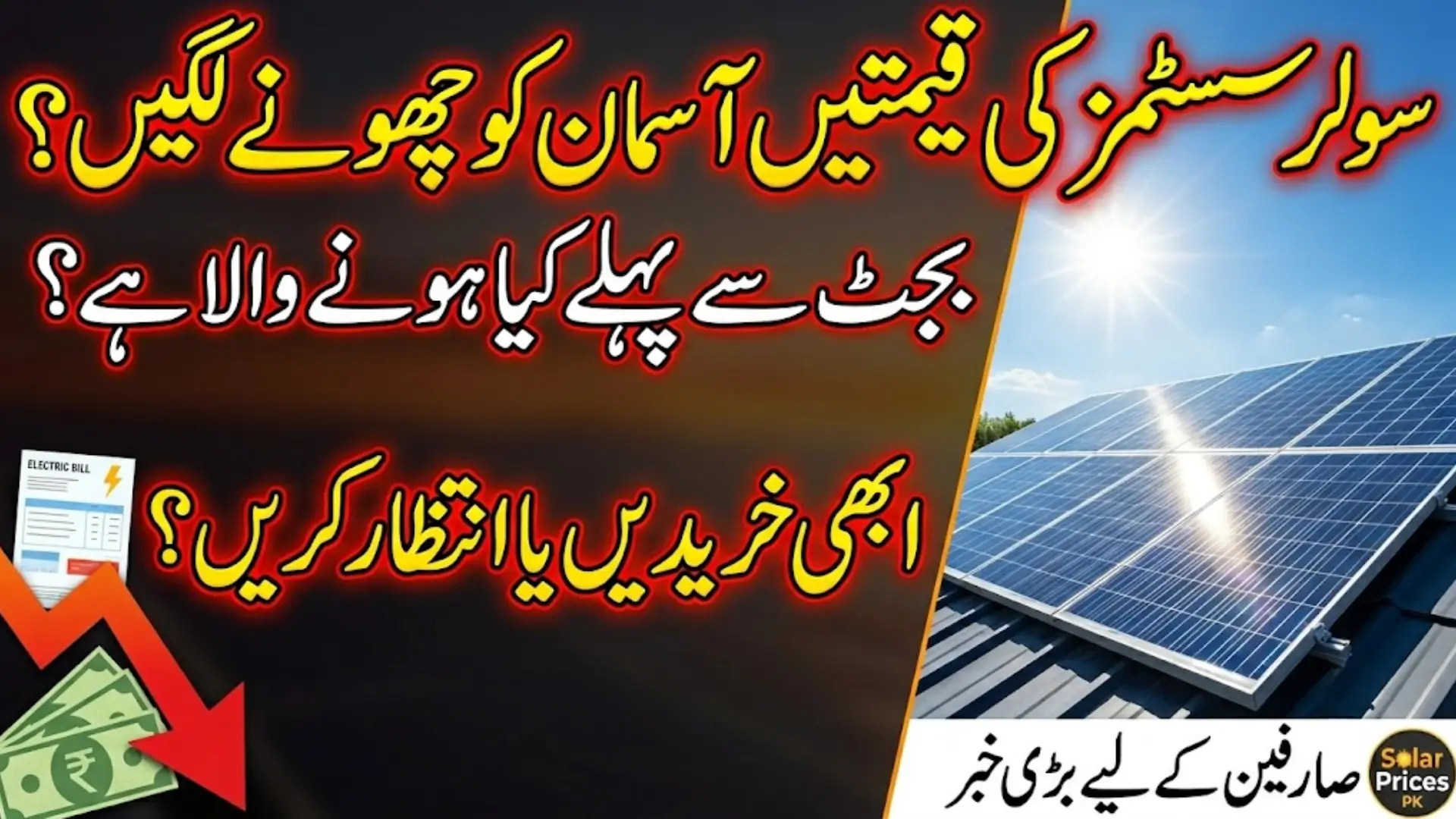
Solar System Prices in Pakistan
Solar system prices in Pakistan have witnessed a significant increase just days before the announcement of the federal budget. Market sources indicate that the prices of various on-grid solar systems have surged sharply, creating concerns among consumers planning to invest in renewable energy solutions.
The latest increase comes at a time when solar adoption is growing across the country. Many households and businesses are turning to solar energy to reduce electricity costs, but rising prices may impact purchasing decisions in the short term.
Key highlights include:
- Price increases reported across multiple solar system categories
- On-grid systems affected the most
- Market uncertainty linked to upcoming budget decisions
- Consumers monitoring future policy changes
You Can Also Read: Redmi K100 Pro Leaks: New Battery, Snapdragon 8 Elite Gen 5, and 185Hz Display Revealed
Solar System Prices in Pakistan Show Significant Increase
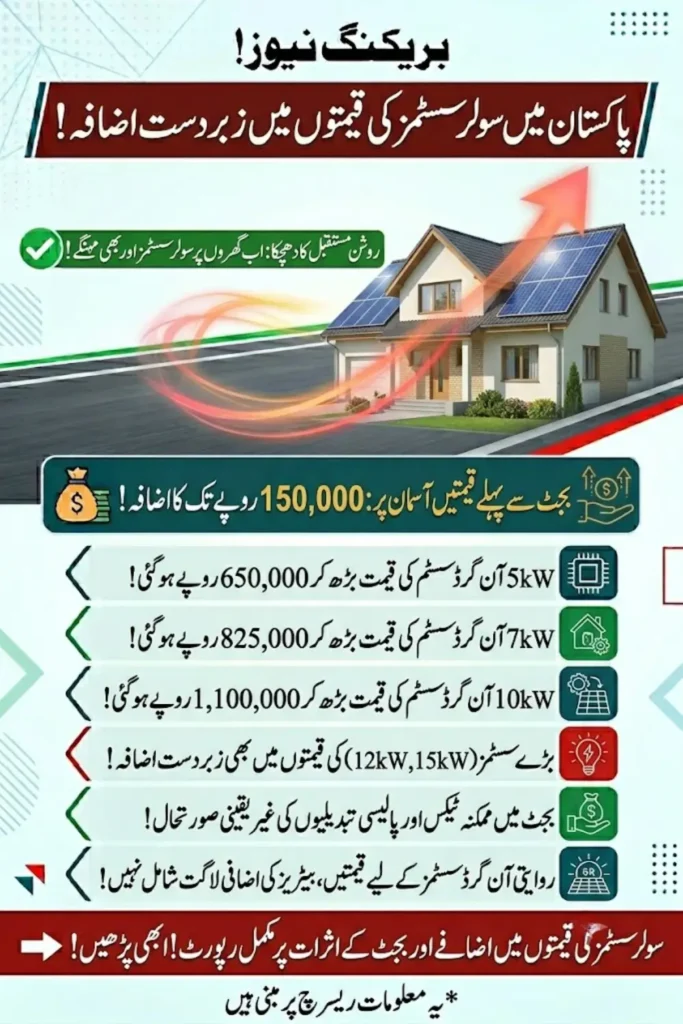
Recent market estimates reveal that solar system prices have climbed considerably over the past few days. The increase ranges from Rs. 150,000 to Rs. 200,000 depending on the size and capacity of the system.
Industry observers believe that uncertainty surrounding potential budget measures is influencing pricing trends. Suppliers and dealers are adjusting rates as discussions continue regarding possible policy changes in the renewable energy sector.
Important developments include:
- 5kW systems increased by Rs. 150,000
- 7kW systems increased by Rs. 200,000
- Larger systems also experienced notable price hikes
- Demand remains strong despite higher costs
Solar System Prices in Pakistan – Updated Rates for 5kW and 7kW Systems
Among the most commonly installed residential systems, the 5kW and 7kW categories have seen major increases. A 5kW on-grid solar system is now priced at approximately Rs. 650,000 after a substantial jump in cost.
Similarly, the price of a 7kW solar system has climbed to Rs. 825,000. These systems are popular among homeowners seeking lower electricity bills, making the recent increase particularly important for consumers.
Price updates include:
- 5kW system now costs Rs. 650,000
- 7kW system now costs Rs. 825,000
- Residential buyers are most affected
- Demand for solar energy remains steady
You Can Also Read: Spoken English Training Program for Teachers: Punjab Launches Skill Development Initiative for 35,000 Educators
Solar System Prices in Pakistan – New Costs for Larger Systems
Larger solar installations have also become more expensive. The cost of a 10kW system has increased from Rs. 900,000 to Rs. 1.1 million, reflecting one of the largest price jumps reported in recent weeks.
The trend continues for higher-capacity systems. A 12kW solar setup is now available for around Rs. 1.25 million, while a 15kW system has reached Rs. 1.45 million. These systems are commonly used by larger homes and commercial users.
Major changes include:
- 10kW system price reached Rs. 1.1 million
- 12kW system now costs Rs. 1.25 million
- 15kW system increased to Rs. 1.45 million
- Commercial consumers may face higher installation costs
Solar System Prices in Pakistan Comparison Table
| Solar System Size | Previous Price | Current Price | Increase |
|---|---|---|---|
| 5kW | Rs. 500,000 | Rs. 650,000 | Rs. 150,000 |
| 7kW | Rs. 625,000 | Rs. 825,000 | Rs. 200,000 |
| 10kW | Rs. 900,000 | Rs. 1,100,000 | Rs. 200,000 |
| 12kW | N/A | Rs. 1,250,000 | N/A |
| 15kW | Rs. 1,300,000 | Rs. 1,450,000 | Rs. 150,000 |
The table highlights the extent of recent increases across popular solar system categories. Buyers considering installations may need to reassess budgets based on current market conditions.
The rise in prices demonstrates how quickly market dynamics can affect renewable energy investments, especially during periods of policy uncertainty.
You Can Also Read: Punjab Green Tractors Scheme: Maryam Nawaz Announces 20,000 Tractors for Farmers with Rs 750,000 Subsidy
Solar System Prices in Pakistan – On-Grid and Off-Grid Cost Differences
The reported prices currently apply only to on-grid solar systems. These systems remain connected to the national electricity grid and do not require battery storage for basic operation.
Consumers interested in off-grid solutions must account for additional expenses associated with batteries and energy storage equipment. These components can significantly increase the total project cost depending on capacity requirements.
Key differences include:
- On-grid systems do not include batteries
- Off-grid setups require storage solutions
- Battery costs increase total investment
- System selection depends on energy needs
Solar System Prices in Pakistan and Budget Uncertainty
The latest price increases have emerged just before the federal budget announcement. Market participants remain uncertain about potential taxation and policy measures that could affect the solar sector.
Any future changes to duties, taxes, or incentives may influence both pricing and demand. As a result, many consumers are closely monitoring government decisions before making purchasing commitments.
Current concerns include:
- Potential policy changes in the solar sector
- Uncertainty regarding future taxation
- Possible impact on consumer demand
- Market waiting for budget clarity
You Can Also Read: Apna Khet Apna Rozgar Scheme 2026 Free Agricultural Land for Deserving Citizens in Punjab
Solar System Prices in Pakistan – Future Outlook
Despite recent increases, the long-term outlook for solar energy in Pakistan remains positive. Rising electricity costs continue to encourage households and businesses to explore renewable energy alternatives.
Industry experts believe that demand for solar installations will continue to grow due to the need for energy independence and lower utility expenses. However, future growth may depend on stable policies and predictable pricing structures.
Future expectations include:
- Continued growth in solar adoption
- Strong demand from residential users
- Increasing interest from businesses
- Greater focus on renewable energy solutions
Solar System Prices in Pakistan Summary Table
| System Size | Current Market Price |
|---|---|
| 5kW | Rs. 650,000 |
| 7kW | Rs. 825,000 |
| 10kW | Rs. 1,100,000 |
| 12kW | Rs. 1,250,000 |
| 15kW | Rs. 1,450,000 |
This summary provides a quick overview of the latest market rates. Consumers can use these figures as a reference when evaluating installation options.
The prices reflect current market conditions and may change further depending on future policy announcements and industry developments.
You Can Also Read: BISP Official June 2026 Payment Update Retail POS System Schedule and Eligibility Details
Conclusion
Solar system prices in Pakistan have increased substantially ahead of the federal budget, affecting both residential and commercial buyers. The rise ranges from Rs. 150,000 to Rs. 200,000 across several popular system categories.
While the higher costs may create short-term challenges, interest in solar energy remains strong due to growing electricity expenses and the long-term benefits of renewable power. Future market direction will largely depend on upcoming budget decisions and policy measures.
FAQs
Why have solar system prices increased in Pakistan?
Prices have risen due to market uncertainty ahead of the federal budget and concerns about possible changes affecting the solar sector.
What is the current price of a 5kW solar system?
The average market price of a 5kW on-grid solar system is approximately Rs. 650,000.
Do these prices include battery storage systems?
No, the reported prices apply only to on-grid systems and do not include batteries.
What is the latest price of a 15kW solar system?
A 15kW on-grid solar system is currently being sold for around Rs. 1.45 million.
Can solar prices change after the budget announcement?
Yes, future taxes, duties, or policy adjustments could affect solar system prices in the coming months.
You Can Also Read: Cross Subsidy Program Pakistan 2026: Online Registration, Eligibility Check, and PITC Lifeline Electricity Tariff Guide