
Solar Panel Tax in Budget 2026-27
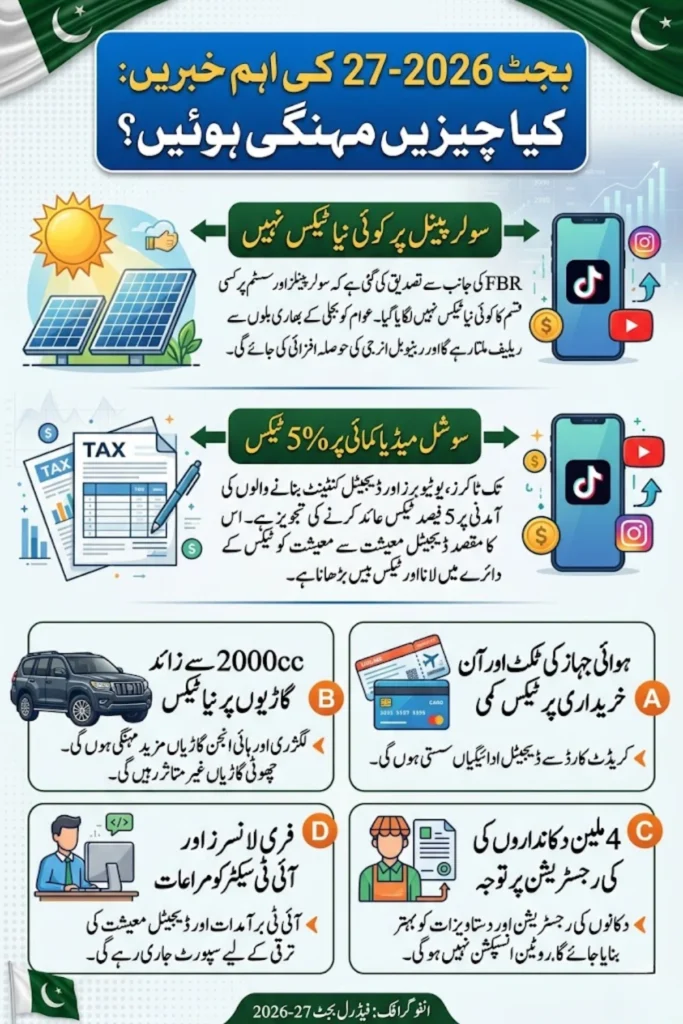
Solar Panel Tax in Budget 2026-27 has introduced several important taxation and enforcement measures, but one of the biggest concerns among consumers has finally been addressed. The Federal Board of Revenue (FBR) has clarified that no new taxes have been imposed on solar panels. At the same time, the government has proposed a 5% tax on income earned through social media platforms and digital content creation.
These announcements were made during a technical briefing on the federal budget, where FBR officials discussed tax reforms, revenue targets, and measures aimed at expanding the country’s tax base while supporting key sectors of the economy.
You Can Also Read: Budget 2026-27 Imported Vehicles Federal Excise Duty: New Taxes on SUVs, Luxury Cars and Electric Vehicles in Pakistan
No New Solar Panel Tax in Budget 2026-27
The FBR has officially rejected reports suggesting that fresh taxes have been imposed on solar panels. According to officials, the renewable energy sector remains untouched in the latest budget proposals.
Solar energy adoption has increased significantly across Pakistan due to rising electricity prices and frequent power shortages. Officials acknowledged that solar power has helped consumers reduce their dependence on the national grid while lowering electricity expenses.
Key highlights include:
- No new tax has been imposed on solar panels.
- Existing solar energy incentives remain unchanged.
- Renewable energy adoption continues to receive support.
- Solar installations are helping reduce electricity costs.
- Households and businesses continue to invest in solar solutions.
The clarification provides relief to thousands of consumers and businesses planning to invest in solar energy systems in the coming year.
How Solar Energy Is Protecting Consumers from Rising Electricity Costs?
FBR officials emphasized that the rapid growth of solar energy usage has played an important role in protecting consumers from higher electricity bills. As more households shift toward renewable energy, pressure on traditional power consumption decreases.
Pakistan has witnessed a significant rise in rooftop solar installations over the last few years. Many homeowners and commercial users have adopted solar systems to manage rising utility expenses and ensure uninterrupted power supply.
| Solar Energy Benefits | Impact on Consumers |
|---|---|
| Reduced electricity bills | Lower monthly expenses |
| Energy independence | Less reliance on grid power |
| Environmental benefits | Reduced carbon emissions |
| Long-term savings | Better return on investment |
| Backup energy solutions | Improved energy security |
The government believes that continued solar adoption can contribute positively to the country’s energy landscape and economic stability.
You Can Also Read: 8070 Registration Online 2026 10,000 Payment In Ramzan Full Guide Step By Step
5% Tax on Social Media Income Proposed
One of the most discussed proposals in Budget 2026-27 is the introduction of a 5% tax on income generated through social media platforms. This measure aims to bring digital earnings into the formal tax system.
According to FBR officials, individuals earning revenue through online platforms will be required to pay the proposed tax. The move is part of broader efforts to document emerging sectors of the digital economy and increase tax compliance.
The proposed tax may apply to earnings from:
- TikTok content creation
- YouTube monetization
- Instagram promotions
- Facebook content revenue
- Brand sponsorships and collaborations
- Other digital content platforms
The government believes this step will help broaden the tax base while recognizing the growing importance of online income sources.
Impact on Influencers and Content Creators
Digital content creators have become an increasingly important part of Pakistan’s economy. Many individuals now earn substantial income through social media platforms, online advertising, and brand partnerships.
Under the proposed framework, influencers and creators may become part of the documented tax system. Officials argue that as digital earnings continue to grow, it is important to ensure fair taxation across all sectors.
For content creators, this proposal could mean:
- Greater tax compliance requirements
- Formal recognition of digital income streams
- Improved documentation of earnings
- Potential future policy support for the digital economy
The final implementation details are expected to become clearer after further budget discussions and legislative approvals.
You Can Also Read: 8070 Registration Online 2026 10,000 Payment In Ramzan Full Guide Step By Step
Relief Measures for Freelancers and the IT Sector
While introducing taxes on social media income, the government has also announced support measures for freelancers and the information technology industry. Officials stated that several incentives have been included to promote exports and strengthen Pakistan’s digital economy.
The IT sector continues to play a crucial role in generating foreign exchange earnings and creating employment opportunities. Policymakers aim to maintain growth momentum by providing targeted support where necessary.
Benefits highlighted in the budget include:
- Support for IT exports
- Encouragement for freelance professionals
- Measures to strengthen digital services
- Policies aimed at increasing foreign exchange earnings
- Continued focus on technology sector growth
These initiatives are expected to help Pakistan remain competitive in the global digital marketplace.
Reduced Taxes on Airline Tickets and Online Purchases
Another consumer-friendly proposal in Budget 2026-27 involves reductions in taxes on airline tickets and online purchases made through credit cards. The government says these measures are designed to facilitate consumers and support economic activity.
Lower taxes could encourage more digital transactions while making travel slightly more affordable for passengers. Officials believe such steps can improve convenience and encourage formal financial transactions.
The proposed benefits include:
- Lower tax burden on air travelers
- Reduced costs for online shoppers
- Increased use of digital payment methods
- Improved consumer convenience
- Support for e-commerce growth
These changes form part of a broader strategy to modernize economic transactions and improve financial documentation.
You Can Also Read: 8800 Free Solar Scheme 2026 Eligibility Verification Know Full Guide Step By Step
New Automobile Tax Measures in Budget 2026-27
The budget also includes taxation changes for the automobile sector. According to FBR officials, new taxes have been proposed for vehicles with engine capacities exceeding 2,000cc.
However, tax rates for vehicles below the 2,000cc category will remain unchanged. The government aims to generate additional revenue from luxury and high-engine-capacity vehicles while minimizing the impact on average consumers.
| Vehicle Category | Proposed Tax Treatment |
|---|---|
| Up to 2,000cc | No major change |
| Above 2,000cc | New taxation measures |
| Luxury vehicles | Higher revenue focus |
| Standard vehicles | Existing rates continue |
The policy aligns with broader revenue-generation objectives outlined in the federal budget.
FBR Revenue Target and Enforcement Strategy
For the fiscal year 2026-27, the government has set an ambitious revenue collection target of Rs. 15.264 trillion. Instead of introducing large-scale new taxes, officials say the focus will be on improving enforcement and compliance.
According to FBR representatives, enforcement measures are expected to generate approximately Rs. 600 billion in additional revenue. Authorities aim to improve documentation and reduce tax evasion across various sectors.
Major enforcement initiatives include:
- Enhanced compliance monitoring
- Expansion of taxpayer registration
- Improved documentation systems
- Data-driven tax enforcement
- Reduction of tax leakages
Officials maintain that stronger enforcement can help increase revenue without placing excessive burdens on existing taxpayers.
You Can Also Read: Apple Touchscreen MacBook Rumored for 2027: Features, OLED Display, macOS 27 Changes, and Expected Price
Registration Challenges Among Shopkeepers
FBR officials revealed that only around 600,000 shopkeepers are currently registered out of an estimated four million across the country. This highlights a significant gap in tax documentation.
Authorities clarified that the proposed trader scheme in Islamabad would not target individuals simply because they own multiple shops. Furthermore, routine inspections of small businesses will not be conducted unless unusual financial discrepancies are identified.
The government hopes improved registration and documentation will strengthen the overall tax system while maintaining fairness for small businesses.
You Can Also Read: Pakistan EV Tax Relief 2026-27: New Taxes on Luxury EVs and Cars Explained
Higher Duties on E-Cigarette Liquids and Professional Tax Rates
The budget proposes higher duties on e-cigarette liquids as part of efforts to discourage tobacco consumption and increase revenue collection. Officials believe the measure supports public health objectives while contributing to government finances.
Meanwhile, professionals such as doctors, engineers, and other service providers will continue to face the existing 15% tax rate under the current framework. No major changes have been announced for these categories in Budget 2026-27.
Conclusion
Budget 2026-27 brings a mix of relief measures and enforcement-focused reforms. The confirmation that no new solar panel tax has been imposed provides reassurance to consumers investing in renewable energy. At the same time, the proposed 5% tax on social media income reflects the government’s efforts to document and regulate the growing digital economy.
With support for freelancers, reduced taxes on airline tickets and online purchases, and stronger enforcement measures, the budget aims to balance revenue generation with economic growth. As implementation progresses, businesses, content creators, and consumers will be watching closely to understand the long-term impact of these proposals.
FAQs
Has the government imposed a new tax on solar panels in Budget 2026-27?
No. FBR officials have confirmed that the budget does not include any new taxes on solar panels or solar energy systems.
What is the proposed social media income tax rate?
The government has proposed a 5% tax on income earned through social media platforms and digital content creation activities.
Will freelancers be affected by the new social media tax?
The government has announced separate relief measures for freelancers and the IT sector, although specific implementation details may vary.
Are taxes increasing for all vehicles?
No. New taxation measures mainly target vehicles with engine capacities above 2,000cc, while rates for smaller vehicles remain unchanged.
What is the FBR revenue target for FY2026-27?
The government has set a revenue collection target of Rs. 15.264 trillion for the upcoming fiscal year.
Will small shopkeepers face regular tax inspections?
FBR officials stated that routine inspections will not be conducted unless unusual expenditures or financial discrepancies are detected.
You Can Also Read: بی آئی ایس پی جون 2026 ادائیگی اپڈیٹ – اب خواتین پاکستان کے کسی بھی ضلع سے رقم وصول کر سکتی ہیں