PSER Eligibility Check 2026 To Avail Punjab Govt Schemes
PSER Eligibility Check 2026 To Avail Punjab Govt Schemes Across Punjab, a large number of families are trying to understand whether their household information is properly recorded in the government welfare system. In daily reporting and public interactions, one common concern appears again and again: people want clarity about their eligibility before applying for any subsidy or relief program. This concern has increased in 2026 because several government schemes now rely on verified household data instead of manual selection.
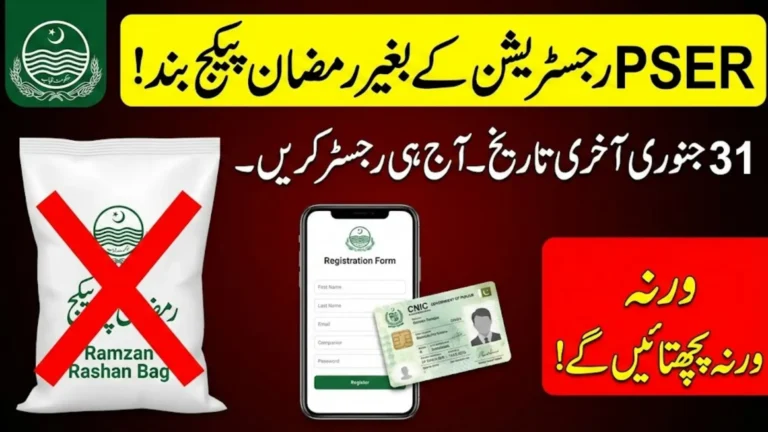
The system responsible for collecting and verifying this data is the Punjab Socio-Economic Registry. It is designed to build a structured record of households so assistance can reach those who genuinely need support. A PSER eligibility check does not mean you are approved for financial aid. It means your household record exists, is verified, and can be evaluated when a scheme is launched. For ordinary citizens, this verification is the first and most important step toward accessing government support.
You Can Also Read: Kpk Ramzan Package 2026 Online Apply
Understanding the Purpose of PSER for Punjab Residents
The PSER survey was introduced to replace informal welfare identification with a structured and transparent system. Instead of relying on local references or temporary lists, authorities now collect standardized data about families across Punjab. This approach helps policymakers understand economic conditions and identify which communities require assistance the most.
From practical observation, households that complete the survey carefully face fewer problems during verification. The registry records family structure, housing conditions, and socio-economic indicators that influence welfare selection. By maintaining a province-wide database, the government can compare needs across districts and allocate resources more efficiently.
The registry plays several important roles in welfare planning:
- It creates a verified database of households across Punjab
- It supports fair selection for subsidy and relief programs
- It reduces duplication and incorrect beneficiary records
- It provides data for policy planning and social protection programs
You Can Also Read: Maryam Ko Batayein Rs 10,000 Scheme App Download
How PSER Data Connects You to Government Support Programs
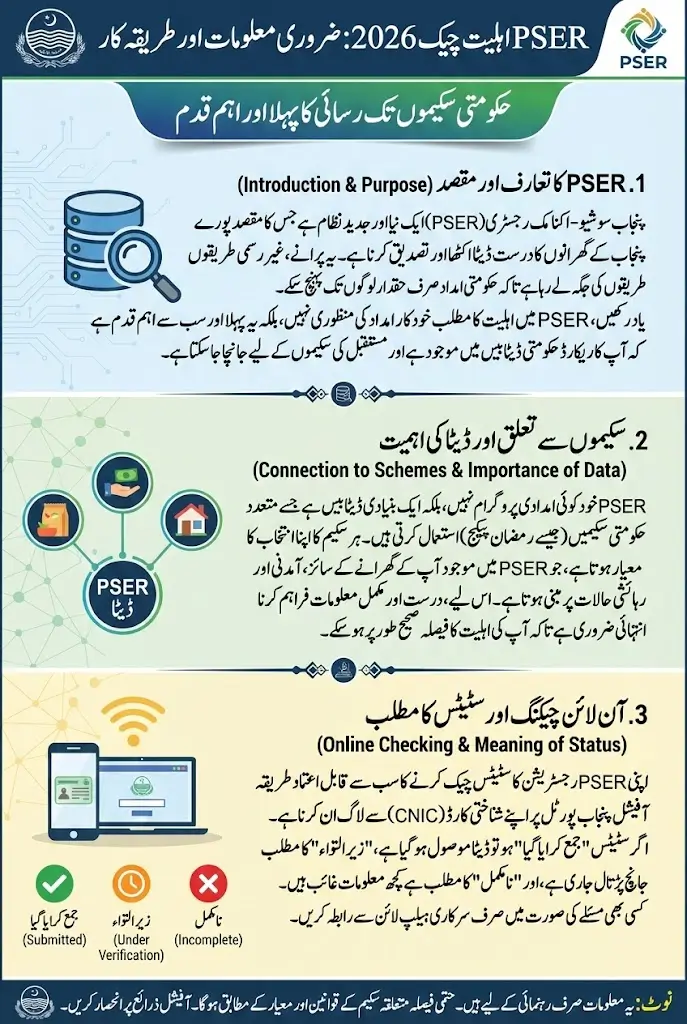
Many citizens assume PSER itself provides financial assistance. In reality, it functions as a foundational database used by multiple government initiatives. When a new subsidy or relief scheme is launched, authorities consult PSER records to identify eligible households. This method allows programs to select beneficiaries quickly without repeating surveys.
Because each program has its own criteria, two households with verified PSER records may receive different outcomes. Selection depends on specific policy rules, such as income indicators, family size, and living conditions recorded in the survey. Accurate data therefore plays a decisive role in future eligibility.
Key facts households should clearly understand:
- PSER registration improves chances of being considered for welfare programs
- Final eligibility is determined by the specific scheme, not the registry alone
- Verified household information is more important than early registration
- Incorrect or incomplete details can delay or prevent consideration
You Can Also Read: Pakistan Approves Immediate Release of Rs19bn for Ramadan Relief
Step-by-Step Method to Verify PSER Registration Status Online
The most reliable method for checking your household record is through official government platforms such as the Punjab Portal. Citizens who registered for the survey can log in using their CNIC and account credentials to view their application status. During high-demand periods, the system may respond slowly, which is a normal technical limitation rather than a rejection.
From user experience across multiple districts, checking status during late evening or early morning often provides better results. Once logged in, applicants can view whether their survey is submitted, under verification, or incomplete.
Follow these practical steps for online verification:
- Access an official government portal to avoid fake websites
- Log in using CNIC and registration password
- Locate the survey or application status section
- Review whether the record is submitted, under review, or incomplete
- Save login details for future status checks
You Can Also Read: PSER Role In PMRRP Online Portal 2026 To Check Status
Meaning of PSER Status Results and Required Action
Understanding status messages helps citizens respond correctly instead of waiting unnecessarily. A submitted or completed status confirms that the system has received household data successfully. Verification in progress indicates that authorities are reviewing details to ensure accuracy and consistency.
If the portal shows incomplete information, it means required data is missing and must be corrected. A CNIC not found message usually appears when the survey has not been submitted properly or the number was entered incorrectly.
Below is a simple guide explaining PSER status results and appropriate action.
| Status | Explanation | Recommended Action |
|---|---|---|
| Submitted / Completed | Household record successfully entered in system | Wait for verification updates |
| Under Verification | Information is being reviewed by authorities | Check again after some time |
| Incomplete / Survey Required | Required details are missing or incorrect | Update information and resubmit |
| CNIC Not Found | Record not available in database | Recheck CNIC or contact support |
Basic Requirements for Inclusion in the Provincial Registry
PSER does not operate on a single income threshold. Instead, it focuses on collecting accurate household information for assessment by welfare programs. Inclusion in the registry primarily depends on proper survey completion and verified residential information within Punjab.
In many reported cases, delays occur because of incorrect family details or inconsistent information across records. Households that provide complete and accurate data generally experience smoother verification processes.
Essential requirements for inclusion include:
- Permanent residence within Punjab province
- Accurate listing of all household members
- Correct CNIC numbers without typing errors
- Consistent address and family information
- Proper submission of survey details
You Can Also Read: Nigehban Ramzan Package 2026 New Payment 10000 Get Sitting
Official Support Channel for PSER Verification Issues
When online verification becomes difficult or confusing, citizens can seek guidance through the Chief Minister Complaint Center. This official support system also handles queries related to Suthra Punjab and Roti Nan, making it a central assistance channel for welfare-related concerns.
From public feedback, many households successfully resolve status problems through this helpline, especially when records do not update for an extended period. The service is free and intended to provide accurate information directly from official sources.
You should contact the helpline when:
- Portal access is not possible
- Survey is submitted but status remains unchanged
- CNIC information appears incorrect
- Someone demands payment for approval
You Can Also Read: Ehsaas Rashan Subsidy 2026 Reopened Apply
Common Technical Problems and Practical Solutions
Technical errors are common during peak registration periods because large numbers of users access the system simultaneously. Most issues are temporary and can be resolved by rechecking details or waiting for system updates. Immediate verification after submission often leads to confusion because records require time to synchronize.
Many citizens also face problems due to browser compatibility or cached data. Simple technical adjustments usually resolve these issues without the need for physical visits or external assistance.
Common issues and practical solutions include:
- CNIC not recognized due to typing errors or delayed updates
- Portal loading problems caused by heavy user traffic
- Verification delays due to incomplete household information
- Login issues resulting from incorrect credentials
Safety Guidelines for Applicants
Verification and registration in PSER are completely free services. Citizens should remain cautious about individuals or agents claiming they can guarantee approval. Reports from different districts show that some people attempt to exploit applicants by demanding payment for verification support.
Protecting personal information is equally important. Government officials never request OTP codes, bank PINs, or biometric data through unofficial channels. Using only verified government sources ensures both data security and accurate information.
Important safety practices to follow:
- Never pay anyone for eligibility confirmation
- Share CNIC information only on official platforms
- Avoid unofficial agents offering guaranteed approval
- Report suspicious activity through official channels
Frequently Asked Questions About PSER Eligibility
Many households seek clarity about what eligibility actually confirms. In simple terms, eligibility indicates that a household record exists and can be evaluated for government assistance programs. It does not guarantee selection but ensures that the household is part of the official database used for welfare targeting.
Another common concern relates to missing records. In most situations, the issue results from incorrect CNIC entry, incomplete survey submission, or delayed system updates. Rechecking information or contacting official support typically resolves these problems.
Key clarifications include:
- Eligibility confirms registration in the provincial database
- Verification may take time depending on system updates
- Different programs apply different selection criteria
- Official helpline is the safest support option
Final Summary
A PSER eligibility check confirms that your household information is recorded and verified in the provincial registry used for welfare targeting. It serves as a foundation for consideration in subsidy and relief programs rather than direct approval for assistance. For families across Punjab, maintaining accurate and verified household data is the most effective way to remain eligible for future government support.
Ensuring correct information, using official verification methods, and staying informed through authorized channels helps citizens navigate the welfare system with confidence and transparency.