PSER Portal 2026
PSER Every year, thousands of families in Punjab miss out on government Ramzan relief packages simply because their household data is missing, outdated, or incorrect. The Punjab Socio-Economic Registry (PSER) has become the primary tool for identifying which households are eligible for government welfare programs, including ration subsidies, cash assistance, and other essential support during Ramzan.
PSER سروے
پنجاب سماجی و اقتصادی رجسٹری
رجسٹریشن فارم
نئی درخواست
بنیادی معلومات
صحت کی حالت
تعلیمی حیثیت
روزگار کی حیثیت
اثاثوں کی معلومات
مکمل تفصیلات کا جائزہ
From my experience covering these programs, families who fail to update their PSER records often face long delays or are entirely excluded from receiving benefits. The PSER system ensures that aid reaches the families who genuinely need it while eliminating fake or duplicate applications. This makes it crucial for every household in Punjab to register or update their information before Ramzan 2026.
The good news is that the PSER registration process is now user-friendly, with both online and offline options. Even families without internet access can ensure their inclusion through government facilitation centers and union council offices. By understanding the PSER process fully, you can secure your Ramzan relief without unnecessary stress.
What is the PSER System?
The Punjab Socio-Economic Registry (PSER) is a digital household database created to modernize welfare distribution across the province. Previously, welfare programs relied on outdated surveys, local recommendations, or manual lists, which often resulted in deserving families being left out. PSER now replaces all of these with a verified, centralized system.

PSER Ramzan Online Registration 2026 PSER Ramzan Online Registration 2026 is an important welfare initiative introduced by the Government of Punjab to help low-income families during the holy month of Ramzan. The program works through the Punjab Socio-Economic Registry (PSER), which collects household information to identify deserving citizens and provide them with financial assistance and…
Continue Reading PSER Ramzan Online Registration 2026 To Avail 13000 And 10000 Payment Full Guide
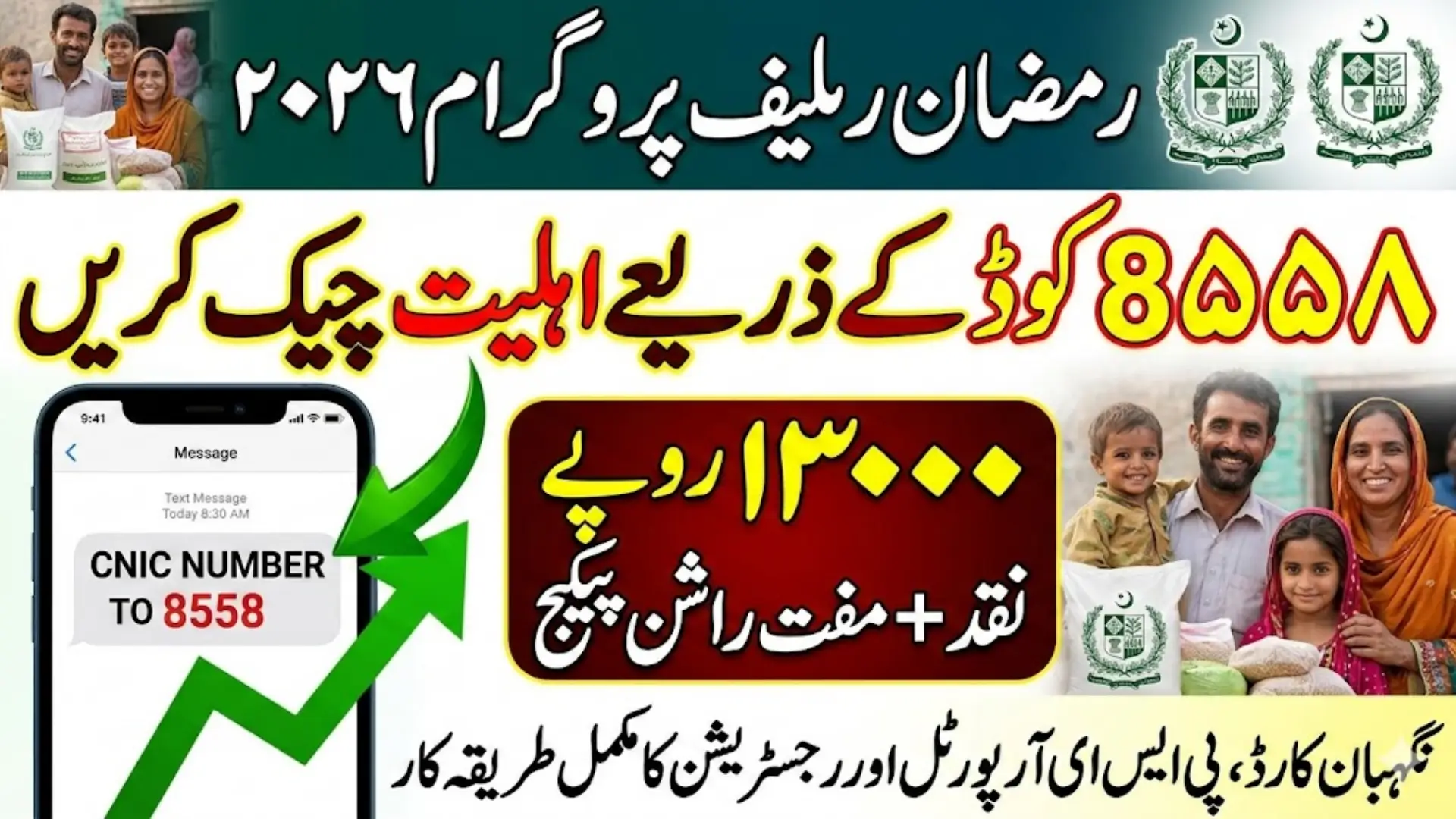
Punjab 8558 Code For Ramzan Relief Program Punjab 8558 Code For Ramzan Relief Program Every year during Ramzan, the government introduces special relief programs to help families manage the rising cost of food and daily necessities. In 2026, the Punjab Government launched the Nigehban Ramzan Relief Program, a welfare initiative aimed at providing financial assistance…
Continue Reading Punjab 8558 Code For Ramzan Relief Program Payment Receiving Message Full Guide

9999 Ramzan Package Online Registration 9999 Ramzan Package Online Registration In Pakistan, the month of Ramzan is a time of blessings, worship, and generosity. However, for many low-income families, it can also become a time of financial pressure. Prices of daily food items often increase before Ramzan, and many households struggle to manage the extra…
Continue Reading 9999 Ramzan Package Online Registration And Status Check By CNIC Full Guide 2026

CM Rehmat Card Scheme CM Rehmat Card Scheme App Web Portal Punjab government has introduced several welfare initiatives in recent years to support poor and deserving families. In 2026, another important step has been taken with the approval of the CM Rehmat Card Scheme, announced by the Chief Minister of Punjab, Maryam Nawaz. This program…
Continue Reading CM Rehmat Card Scheme App Web Portal And Office For Registration Full Guide 2026

Maryam Nawaz 10000 Scheme Online Registration Maryam Nawaz 10000 Scheme Online Registration Ramzan Relief Initiative 2026, introduced by the Government of Punjab under the leadership of Maryam Nawaz, is designed to provide direct financial and food support to low-income households during the holy month of Ramzan. The program responds to rising inflation and increasing household…
Continue Reading Maryam Nawaz 10000 Scheme Online Registration in 9999 Step by Step
Wazir e Azam Ramzan Package 13000 Payment Wazir e Azam Ramzan Package 13000 Payment has become a major source of relief for thousands of low-income households across Pakistan. As Ramzan approaches, many families struggle to manage grocery bills, utility payments, and daily expenses. This year, the government has introduced a clearer, digital and corruption-free system…
Continue Reading Wazir e Azam Ramzan Package 13000 Payment Check By CNIC In March 2026 Full Guide
PSER collects detailed information about each household, including:
- Income level and employment status of family members
- Number of dependents and household size
- Education levels and literacy
- Housing conditions and asset ownership
The registry provides a clear picture of which families require government support. Families with accurate and updated PSER records have a higher chance of receiving Ramzan subsidies on time, while duplicate or false applications are automatically filtered. In my observation, this has significantly reduced favoritism and ensured fairness in Punjab’s welfare programs.
Punjab Nigahban Card
The Punjab Government led by Chief Minister Maryam Nawaz Sharif, has launched the Nigahban Card to provide financial assistance to deserving citizens across the province. This program aims to help low-income families access funds directly without relying on middlemen or complicated bureaucratic procedures. The initiative ensures that assistance reaches the intended beneficiaries safely, efficiently, and transparently.
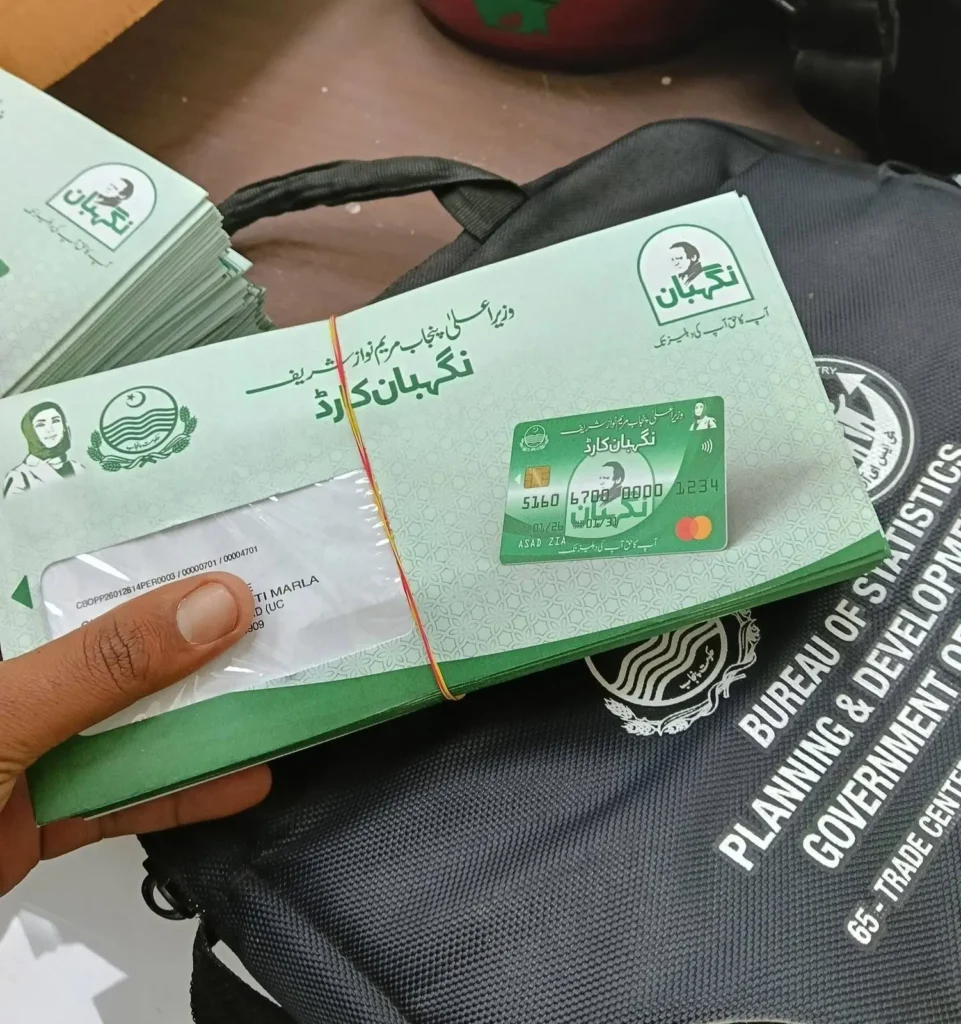
وزیر اعلیٰ مریم نواز شریف کی زیر قیادت پنجاب حکومت نے صوبے بھر کے مستحق شہریوں کو مالی امداد فراہم کرنے کے لیے نگران کارڈ کا اجراء کر دیا ہے۔ اس پروگرام کا مقصد کم آمدنی والے خاندانوں کو درمیانی افراد یا پیچیدہ بیوروکریٹک طریقہ کار پر انحصار کیے بغیر براہ راست فنڈز تک رسائی میں مدد کرنا ہے۔ پہل اس بات کو یقینی بناتی ہے کہ امداد مطلوبہ مستحقین تک محفوظ طریقے سے، مؤثر طریقے سے اور شفاف طریقے سے پہنچے۔
From my experience reporting on this program, many people were initially unaware of how to use the card effectively. The government has introduced clear guidelines to help beneficiaries withdraw money, make purchases, and use digital payment platforms safely. Understanding the full process is essential to make the most of this financial support.
Nighaban Card Supported Payment Channels and Services
The Punjab Government has partnered with multiple banking and digital platforms to ensure that the Nigahban Card can be used efficiently. Beneficiaries can access their funds through several channels, giving them flexibility in receiving payments and making transactions.
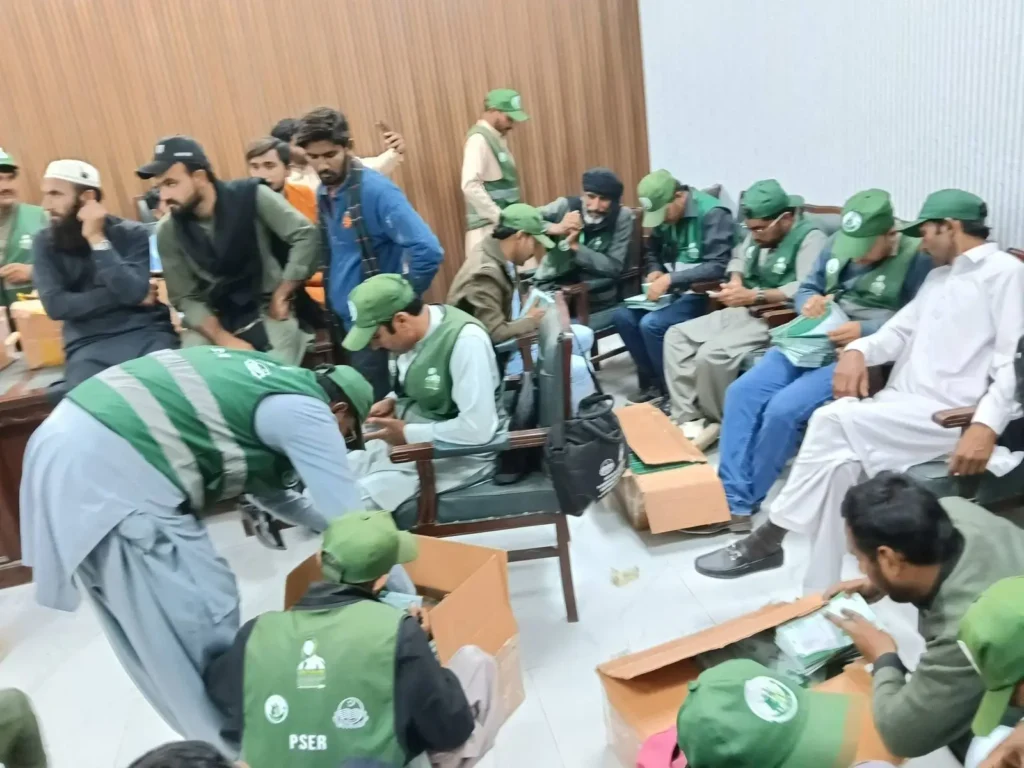
Here is a clear table showing all supported services:
| Payment Service | How It Helps Beneficiaries |
|---|---|
| Bank of Punjab (BOP) | Card issuance, support, and secure ATM withdrawals |
| UBL Omni | Assisted branchless banking services |
| HBL Konnect | Easy access for cashless payments in remote areas |
| AlfaPay | Digital wallet for convenient online and POS payments |
These options ensure that beneficiaries, whether living in cities or remote villages, can access their funds without difficulty.
Official Helpline Support for Cardholders
The Punjab Government has set up a dedicated helpline to assist Nigahban Card users with any problems or questions. Beneficiaries can receive guidance on usage, report deductions, or clarify eligibility issues.
| Helpline Service | Contact Number |
|---|---|
| BOP Customer Support | 042-111-267-200 |
Using the helpline ensures that beneficiaries have direct access to official support without being misled by unofficial sources. Always rely on this helpline for accurate guidance
How PSER Connects to Ramzan Relief Programs
Ramzan relief packages in Punjab are now fully data-driven. Authorities use PSER data to estimate how many families need subsidized food, flour, and cash support. Without a PSER record, even needy households may be excluded automatically, regardless of their financial situation.
Benefits linked to PSER include:
- Subsidized ration bags containing essential food items
- Discounts on flour and other daily necessities
- Direct cash assistance for low-income families
- Emergency support during the holy month
By relying on verified PSER data, the government can ensure smooth delivery of resources, prevent shortages, and reduce delays in disbursing relief to deserving families.
Who Should Register or Update Their PSER Record in 2026
Many people think PSER registration is only for new applicants, but this is not true. Both newly surveyed households and those who registered previously must verify and update their information. Any changes in family size, income, or living conditions can affect eligibility for Ramzan relief and other welfare programs.
You should register or update your PSER record if:
- Your household was never included in previous surveys
- There has been a significant increase or decrease in income
- A new family member has been added
- You were rejected from earlier welfare programs
- You want to remain eligible for current and future subsidy programs
Households that update their PSER information regularly face fewer verification issues and often receive benefits more quickly than those who delay.
Step-by-Step Online Registration Process
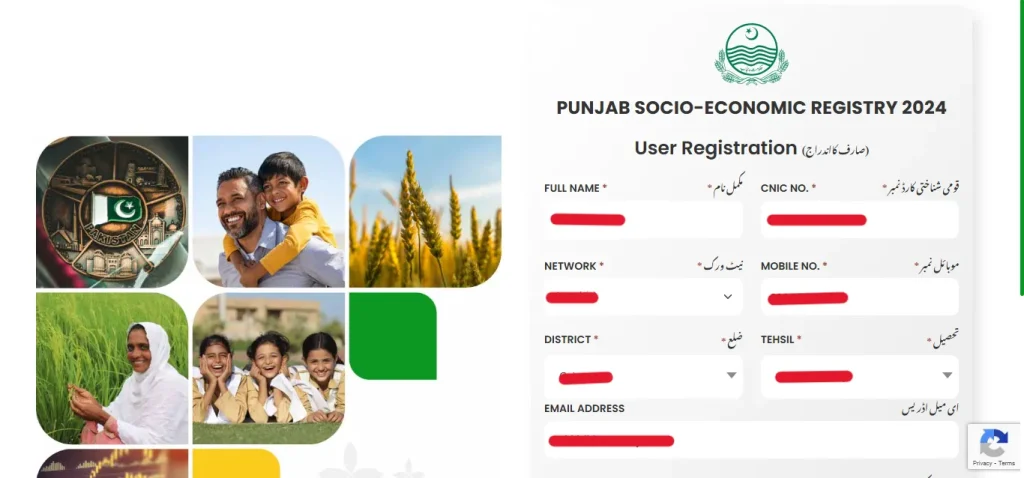
The PSER online registration process is straightforward but requires careful attention. From what I have seen, even small mistakes can delay approvals. Here is the complete step-by-step process for online registration:
- Open the official PSER portal using a computer or mobile device.
- Enter the CNIC of the household head and the mobile number linked to it.
- Verify your identity through OTP or confirmation messages sent to your mobile number.
- Complete household information, including income, family members, employment, education, and housing details.
- Review all submitted information carefully to avoid errors before final submission.
It is important to remember that PSER registration is completely free. No online or offline payment is required, and government staff are not authorized to collect any fees.
How to Apply for PSER Survey Program 2026: Step-by-Step Guide
After completing your PSER portal registration, the next step is to submit a new PSER Survey application. This application will determine your eligibility for Ramzan relief and other Punjab government welfare programs. Here’s a detailed, step-by-step guide to make the process smooth and error-free.
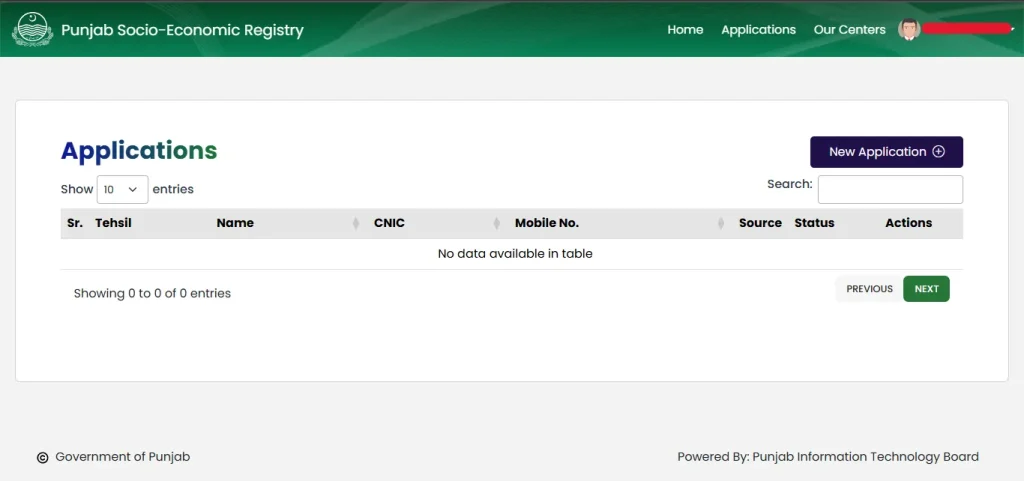
Step 1: Start a New Application
- Visit the official PSER Portal and log in using your CNIC and the password you created during registration.
- Click on the “New Application” button to begin.
- You will see a declaration form. Read it carefully, check the confirmation box, and click Save to proceed.
Step 2: Enter Family Head Details
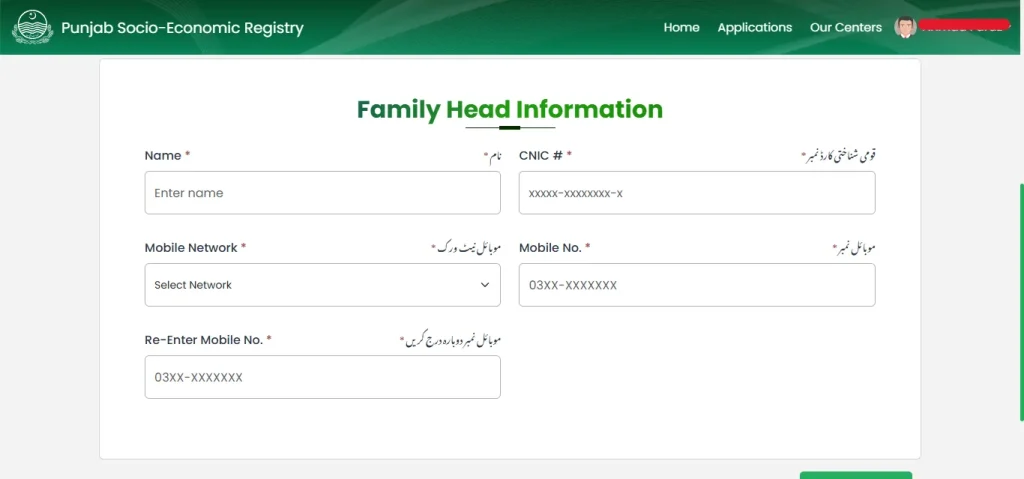
Next, provide the essential information about the head of your household. You will need to enter:
- Full name of the family head
- CNIC number
- Mobile number registered with that CNIC
After filling in these details, click the “Submit” button. You will receive a verification code (OTP) on the provided mobile number. Enter this code to confirm your identity and move to the next step.
⚠️ Tip: Make sure the mobile number is active and linked to the CNIC, otherwise your verification may fail.
Step 3: Add Family Members
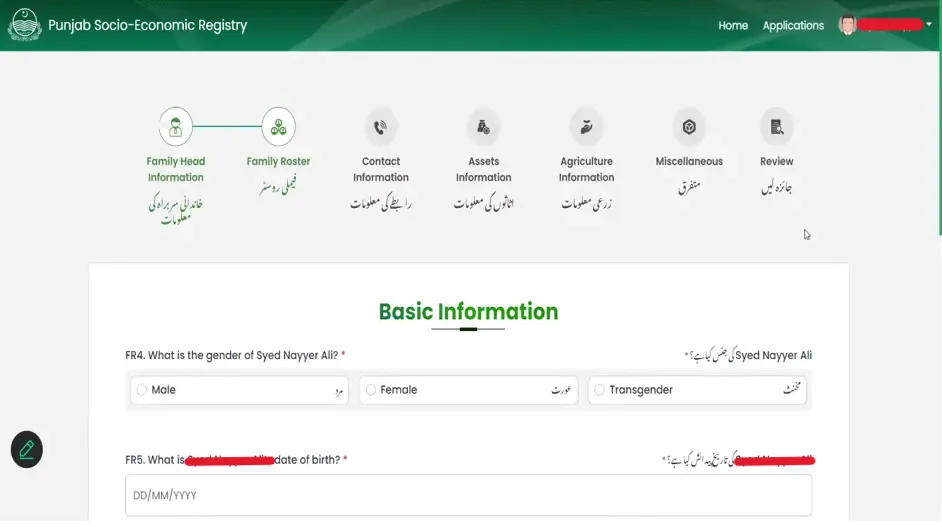
In this step, you need to enter information for each member of your household individually. This helps PSER understand your family structure and determine eligibility for welfare programs.
For each family member, provide the following details:
- Full name
- Gender
- Date of birth
- CNIC or B-Form number (for children)
Make sure all information is accurate, as any mistakes could delay your application or affect your eligibility for Ramzan relief and other PSER benefits
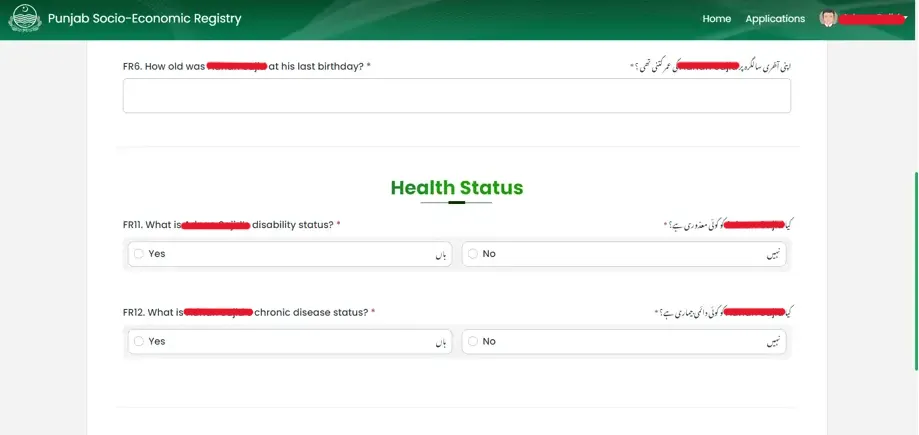
Health Information
Next, you need to provide details about the health of each family member. Mention if anyone has a disability or chronic illness that affects their daily life.
If no one in your household has any health issues, simply select “No”. Providing accurate health information helps PSER assess your family’s needs for welfare and support programs.
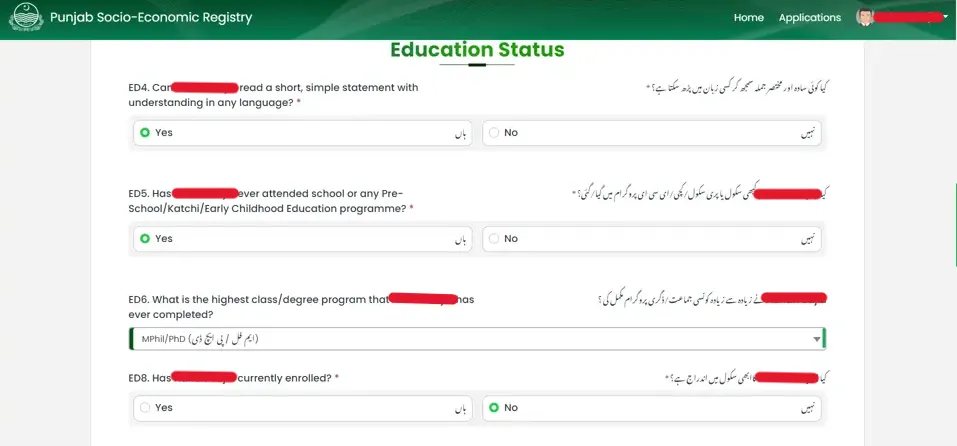
Education Details
In this step, provide information about each family member’s education. Indicate whether they are literate or not, and mention their highest level of education or qualification.
Accurate education information helps PSER understand the household’s learning background, which is important for planning welfare and support programs
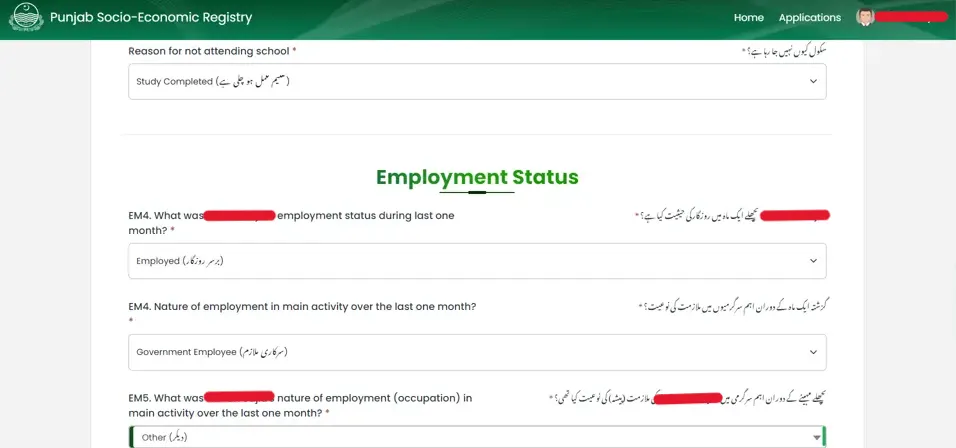
Employment Details
Now, provide information about the work status of each family member. Include whether they were employed or unemployed in the last month and describe the type of work or occupation they do.
Accurate employment information helps PSER assess your household’s financial situation, which is important for determining eligibility for Ramzan relief and other welfare programs.
Step 4: Contact Information
In this step, provide reliable contact details for your household. Enter two active mobile numbers along with their respective network names so the PSER team can reach you easily.
Next, fill in your current and permanent addresses. Make sure the information is accurate. Also, indicate whether your home is in a rural or urban area. Correct contact and address details help authorities verify your household quickly and avoid delays in receiving welfare benefits.
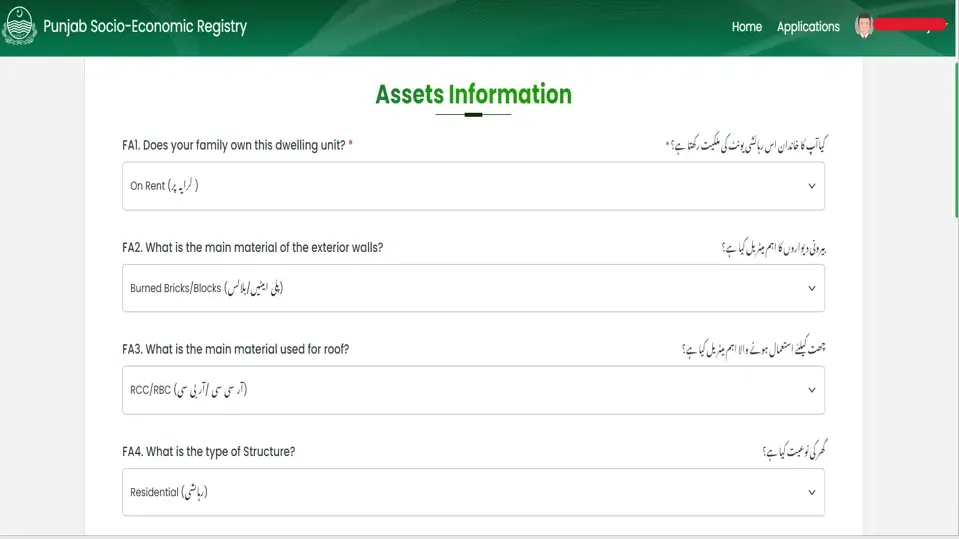
Step 5: Asset Information
This step is important because it helps determine your household’s eligibility for PSER welfare programs. Provide details about any property or dwelling unit your family owns.
Include information such as:
- Whether you own a house or apartment
- The type of construction (brick, concrete, etc.)
- Material and structure of the dwelling
Accurate asset information ensures fair assessment and helps the government prioritize aid for families who need it most.
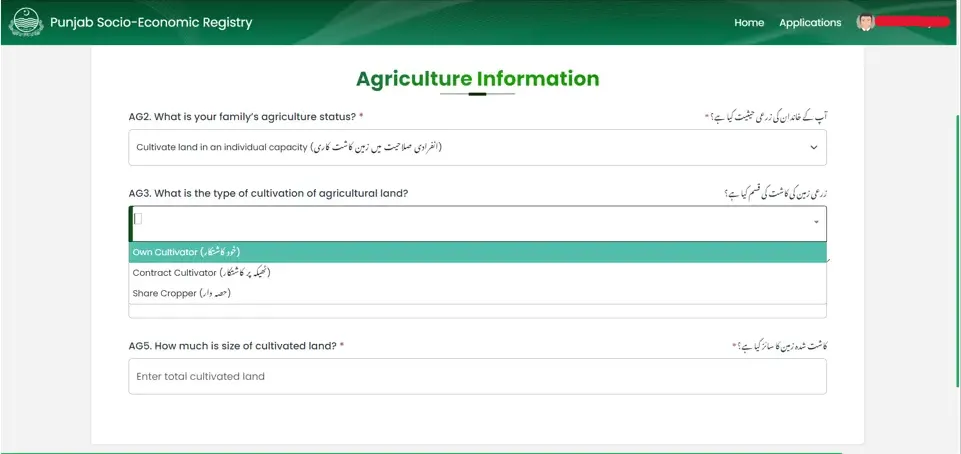
Step 6: Agriculture Information
In this step, provide details about any agricultural land your family owns. If your household does not own farmland, you can simply select “No.”
If you do own land, include the following information:
- The size of the land
- The type of cultivation or crops grown
- Ownership status of the land
Providing accurate agricultural information helps PSER assess your household’s resources and determine eligibility for welfare programs, especially those related to farming support and rural assistance
Step 7: Miscellaneous Information
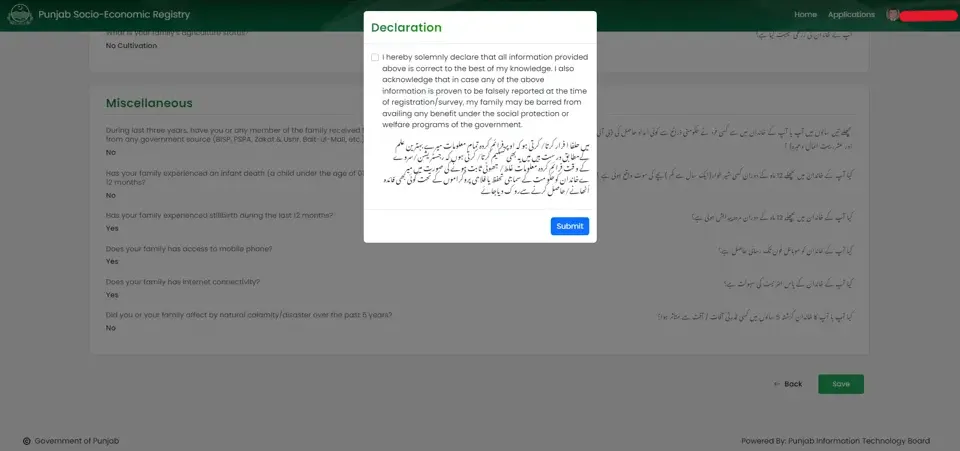
In this step, answer a few additional questions about your household. These questions help PSER understand your family’s special circumstances. You will need to provide information about:
- Whether your household is receiving assistance from any other government program
- Any child deaths in the past year
- Access to mobile phones and the internet
- Whether your family has been affected by a natural disaster in the last five years
Answer these questions honestly, as this information helps authorities assess your family’s needs and ensures you are considered for all relevant welfare programs.
Step 8: Review and Submit
Before final submission, carefully review your entire application. Check all the details about your household, family members, income, assets, and other information for accuracy.
Once you are sure everything is correct, click the “Save and Submit” button to complete your application. After submission, the PSER team will process your data and contact you if your household qualifies for Ramzan relief or other welfare benefits.
How to Check Your PSER Application Status Online
You can easily check your application status at any time:
- Visit the official PSER portal
- Log in using your CNIC and password
- Check your list of applications and their current status
📞 For further assistance, call the PSER helpline: 0800-02345.
Documents and Information Required
Preparing documents and information in advance is critical for a smooth registration process. In my reporting experience, delays often occur because applicants do not have their details ready. You should have the following before registering:
- CNIC of the household head
- B-Form numbers for all children
- Active mobile number linked to CNIC
- Approximate monthly household income
Having these documents ready ensures that your application is completed correctly the first time, reducing the chances of rejection or delay.
Eligibility Criteria for PSER 2026
PSER has clear benchmarks to determine eligibility for welfare programs. Families who do not meet these criteria may face rejection or delayed approval.
| Requirement | Explanation |
|---|---|
| Residency | Must be a permanent resident of Punjab |
| CNIC | Valid CNIC issued by NADRA |
| Household Head | Only one registered head per household |
| Income Level | Low to middle-income households |
| Mobile Number | Active number linked with CNIC |
| Data Accuracy | Information must be verifiable |
Meeting these criteria ensures that your household is visible to authorities and eligible for Ramzan relief and other PSER-linked programsOffline Registration Options
Not all households have access to the internet. For these families, the Punjab government provides offline registration through:
- E-Khidmat centers and PSER desks
- Union council offices in every district
- Government facilitation centers with trained staff
Offline registration is particularly helpful for:
- Elderly citizens
- Rural households without smartphones
- Families with low literacy levels
Trained staff members enter the data into the PSER system on behalf of applicants, ensuring no deserving household is left out.
Common Mistakes to Avoid
From my coverage of PSER registration drives, I have noticed that most rejections happen due to simple errors. To improve your chances:
- Ensure CNIC numbers are correct and valid
- Provide accurate income details
- Use only active mobile numbers linked to CNIC
- Avoid creating duplicate household entries
- Complete all mandatory fields carefully
Reviewing your application thoroughly before submission can prevent delays and verification problems.
Advantages of Early Registration
Registering early has multiple benefits for both families and the government. Based on what I have observed:
- Authorities can estimate the number of beneficiaries accurately and plan resources efficiently
- Families receive their Ramzan relief on time without unnecessary delays
- Early registration ensures priority inclusion in future welfare programs
Households that delay registration often face verification issues and may even be excluded if resources are limited.
PSER Survey Programs Available
PSER is not limited to Ramzan relief. It connects households to multiple welfare programs based on socio-economic needs. Some of the key programs include:
- Ration Card for food assistance
- Himmat Card for daily expenses support
- Kisan Card for farmers
- Widow Card for widows
- Livestock Program for small-scale farmers
- Ramzan Nigehban Program for monthly Ramzan aid
- Benazir Kafaalat & Nashonuma Programs for vulnerable families
- Apni Chhat Apna Ghar for housing support
These programs help ensure families receive comprehensive support for basic needs, education, and livelihood opportunities.
How to Check PSER Status Online
Once registered, it is easy to check your PSER application status online:
- Visit the official PSER portal
- Log in using your CNIC and password
- View the status of your submitted application
For additional assistance, families can call the helpline: 0800-02345. This ensures that even if there is a delay, you can track your application and resolve any issues.
Conclusion
PSER registration in 2026 is essential for every family in Punjab that wants to access Ramzan relief and other government welfare programs. Families that update or register their PSER records on time face fewer verification issues and receive benefits smoothly.
Without PSER registration, a household remains invisible to the system, no matter how genuine their need. To secure your Ramzan relief package and access other welfare benefits, register today and ensure your family is included in Punjab’s socio-economic registry