CM Punjab Nigehban Ramzan Package 2026
Ramzan brings extra household expenses at exactly the time many families in Punjab are already struggling with inflation. To ease that pressure, the Punjab government rolled out the Nigehban Ramzan Package 2026 under Chief Minister Maryam Nawaz Sharif, combining direct cash support with a shift away from the old system of long queues at utility stores.
This guide explains how the program actually works the 8070 SMS code, the PSER portal, who qualified, and how the cash and ration benefits were delivered. Whether you’re checking your own status or researching the program for reference, here’s what the scheme really involved.
You Can Also Read: 8800 Free Solar Scheme 2026 Eligibility Verification Know Full Guide Step By Step
What Is the Nigehban Ramzan Package?
The Nigehban Ramzan Package is a provincial relief initiative that replaced Punjab’s older Ramzan Rashan Program with a more digital, doorstep-focused model. Rather than requiring families to collect discounted flour and sugar from crowded utility stores, the 2026 version centered on a direct cash transfer paired with home-delivered ration support.
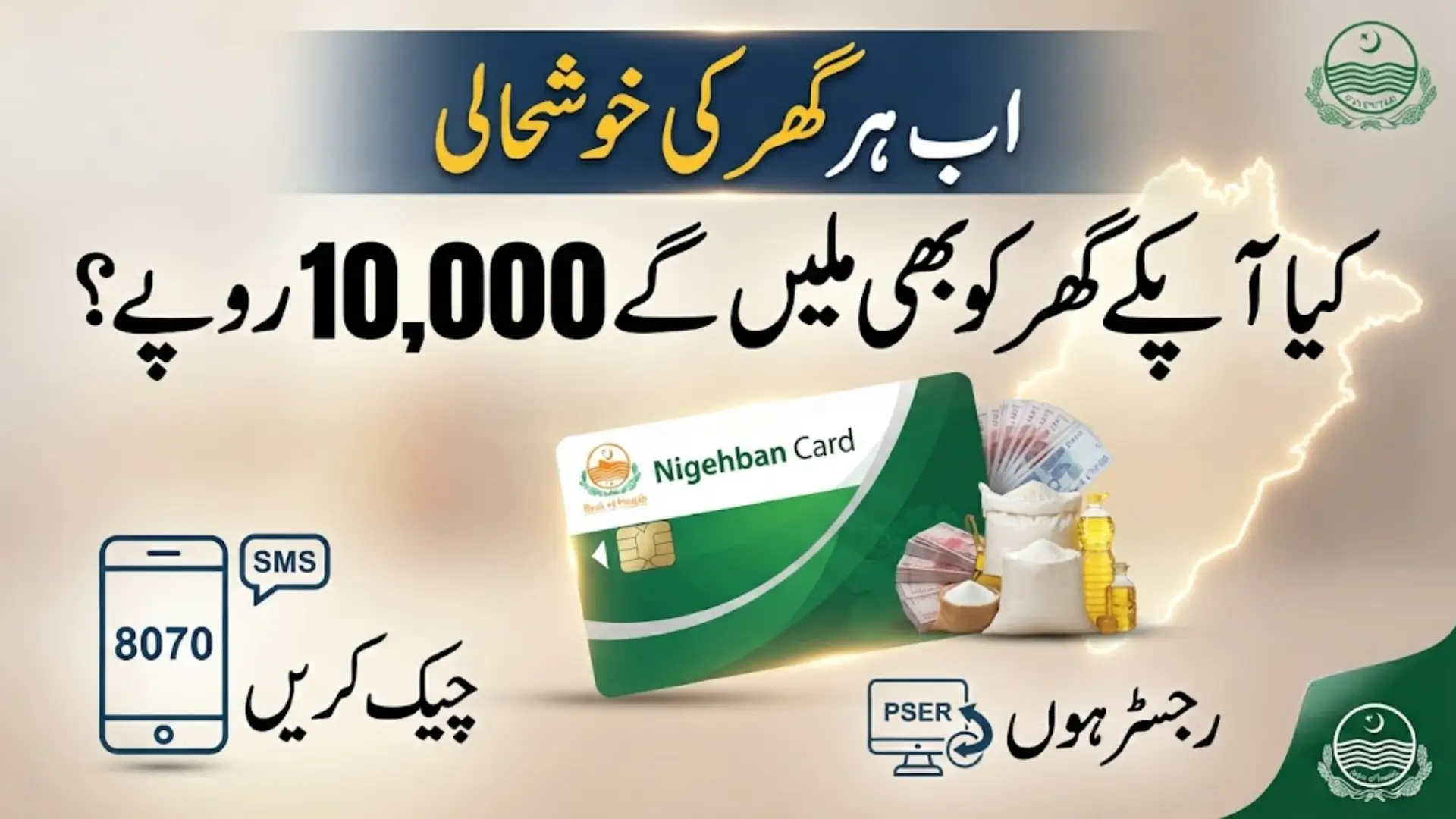
The program relied on the Punjab Socio-Economic Registry, commonly known as PSER, to identify genuinely low-income households. Eligible families were selected and verified using this registry cross-checked against NADRA records, and the scheme was reported to cover several million households across the province, with cash disbursed through a dedicated Nigehban Card issued in partnership with the Bank of Punjab.
You Can Also Read: HEC Law GAT 2026 Registration Open – Apply Online Before 19 July
Understanding the 8070 SMS Verification Code
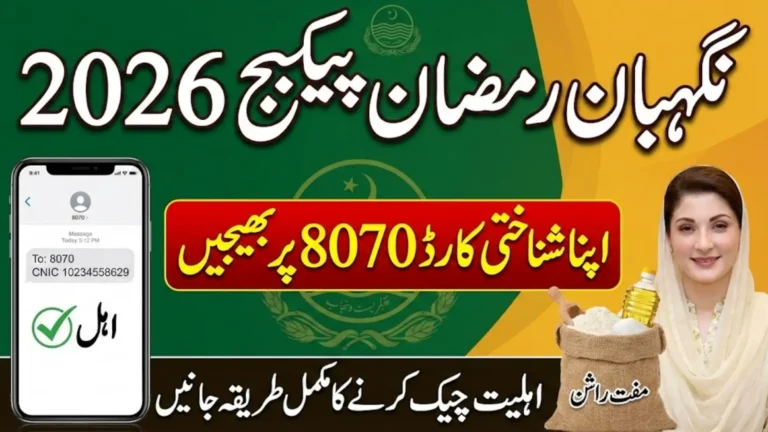
For families without reliable internet access, the government kept a simple SMS option open through the shortcode 8070. This was the fastest way to check whether a household had already been identified as eligible in the PSER database.
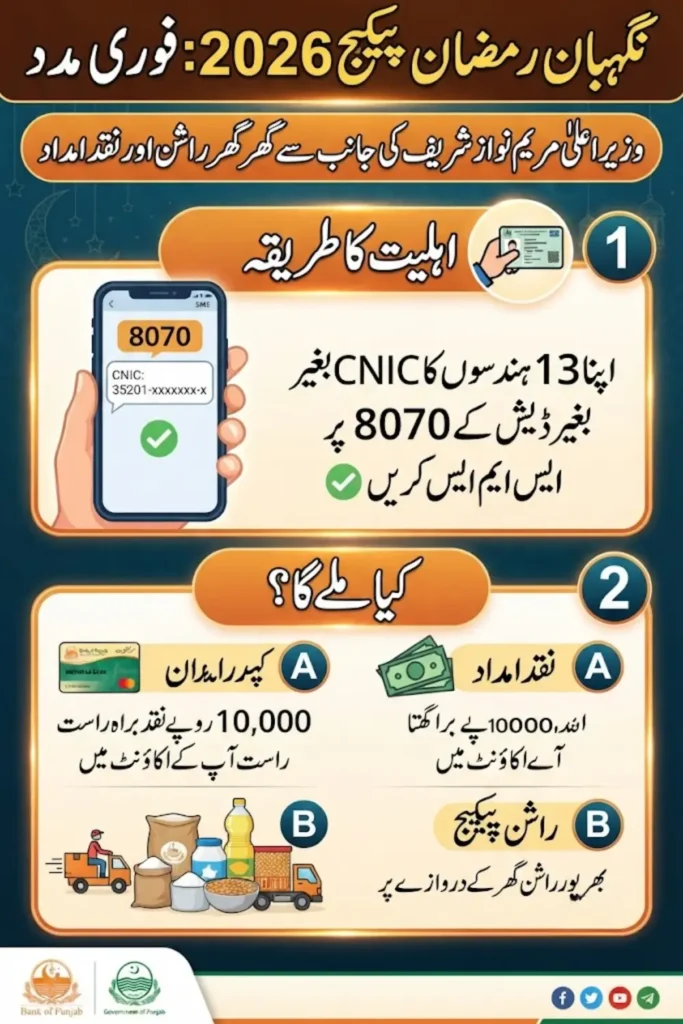
To use it, applicants sent their 13-digit CNIC number, typed without dashes or spaces, to 8070 from any Pakistani network. The reply typically confirmed eligibility status directly, or instructed the sender to complete registration through the PSER portal if their household wasn’t yet in the system. This kept the verification process usable even in areas with limited digital access.
How the SMS Format Works?
The format for this shortcode was intentionally simple, unlike some other government schemes that require a reference number as well:
- Open your phone’s SMS app
- Type your 13-digit CNIC number with no dashes or spaces
- Send it to 8070
- Wait for the automated reply, which usually arrived within a few minutes
If a household received a “record not found” reply, that generally meant they weren’t yet part of the PSER database and needed to complete a household survey before being considered.
You Can Also Read: Tax Calculator Pakistan 2026-27 – Salary Tax Calculator, Income Tax Calculator, Freelancer Tax Calculator & FBR Tax Slabs Guide
Registering Through the PSER Online Portal
Families with internet access could register or update their information directly through the official PSER portal at pser.punjab.gov.pk. This route generally gave applicants more control and allowed them to track their status afterward.
The process involved creating an account with a CNIC and mobile number, verifying identity through an OTP, and then completing a household survey covering income, family size, assets, and employment details. Accuracy mattered here — incorrect or inconsistent information was one of the most common reasons applications were delayed or rejected, since the system cross-checks everything against NADRA records.
Who Was Eligible for the Ramzan Package?
Eligibility wasn’t open to everyone. The scheme specifically targeted low-income households using a Poverty Means Test, commonly referred to as PMT score, along with residency and income checks.
Generally, families needed to be permanent residents of Punjab with a valid CNIC, and monthly household income needed to fall below a set threshold, most commonly reported at Rs. 60,000. A PMT score below 30 was treated as a priority indicator, meaning households already flagged as extremely low-income in the PSER system were more likely to be included automatically. Families with a registered vehicle, other than a tractor, or a history of international travel outside religious pilgrimage were typically excluded.
You Can Also Read: PTA Tax on Imported Phones in Monthly Installments Starts July 1 Under Finance Bill 2026-27
| Eligibility Factor | Requirement |
|---|---|
| Residency | Permanent resident of Punjab, verified via CNIC |
| Monthly Income | Generally below Rs. 60,000 |
| PMT Score | Below 30, given priority |
| Vehicle Ownership | Disqualifying, except tractors |
| Existing BISP Kafaalat Beneficiaries | Often automatically considered eligible |
Because different sources reported slightly different income cutoffs over the course of the program, it’s worth confirming your household’s exact status directly through 8070 or the PSER portal rather than relying on one fixed figure.
What Benefits Did Eligible Families Receive?
The core of the package was a one-time cash payment, but it wasn’t the only form of support offered. The government combined direct financial aid with in-kind assistance to cover different household needs.
The centerpiece was a one-time cash assistance of Rs. 10,000, distributed through the Nigehban Card issued by the Bank of Punjab, which could be used at ATMs or through biometric verification at partner banking agents. Alongside the cash component, registered families were also eligible for a free ration package and discounted purchases at select utility stores.
You Can Also Read: Pakistan to Train 400,000 Workers for Saudi Arabia FIFA World Cup 2034 Jobs
| Benefit Type | Details |
|---|---|
| Cash Assistance | Rs. 10,000 one-time payment via Nigehban Card |
| Free Ration Support | Staple food items including flour, sugar, and cooking oil |
| Delivery Method | Doorstep delivery or collection via designated centers |
| Utility Store Access | Discounted rates on select additional items |
How the Cash and Ration Delivery Worked
The government’s stated goal was to remove the long queues associated with older Ramzan schemes. Both the cash and ration components were designed to reach households with minimal in-person visits.
For the cash portion, verified beneficiaries received a Nigehban ATM/debit card that could be used at Bank of Punjab machines or other partner bank ATMs, with a PIN-based or biometric withdrawal process. For the ration component, bags were delivered directly to registered home addresses through Pakistan Post or authorized district teams in most areas, though some families were asked to collect their allocation from a nearby distribution point depending on their location.
Tracking Your Application Status
Once registered, families had a few different ways to follow up on where their application stood, which was especially useful given how many households applied across the province.
- Logging into the PSER portal to view a status marked as verified, pending, or under review
- Sending a CNIC to 8070 for an instant automated SMS update
- Calling the official Punjab helpline for manual assistance with stuck applications
- Visiting a local Union Council office or facilitation center if online options weren’t accessible
Common Mistakes That Delayed Applications
A number of otherwise-eligible households ran into avoidable delays. Most of these came down to small errors rather than actual ineligibility.
- Using a SIM card not registered under the applicant’s own CNIC
- Reporting income above the eligibility threshold, even by a small margin
- Leaving outdated NADRA details, such as widow or disability status, unupdated
- Submitting more than one application from the same household
- Paying anyone who claimed they could speed up approval for a fee
Registration for this scheme was entirely free at every stage. Any request for payment during the process was not part of the official system.
You Can Also Read: NADRA Pak ID Facial Recognition Verification for Pensioners: Government Ends Bank Visits for Pension Payments
Conclusion
The Nigehban Ramzan Package 2026 marked a shift toward a more digital and dignity-focused welfare model in Punjab, pairing a Rs. 10,000 cash grant with ration support delivered closer to people’s doorsteps. The 8070 SMS code and the PSER portal were the two main channels used to check eligibility and register, with verification tied closely to income and PMT score data.
If you’re checking your own household’s status or referencing this scheme for future welfare planning, the safest approach is always to use the official 8070 shortcode or pser.punjab.gov.pk directly, and to treat any request for payment as a warning sign rather than a legitimate part of the process.
Frequently Asked Questions
1. What number do I send my CNIC to for the Nigehban Ramzan Package?
Send your 13-digit CNIC, without dashes or spaces, to the official shortcode 8070 to check your eligibility status.
2. Is there a fee to register for this scheme?
No, registration through both SMS and the PSER portal is completely free, and no agent should charge you for it.
3. What was the main cash benefit under this package?
Eligible households received a one-time Rs. 10,000 cash payment, distributed through the Nigehban Card issued by the Bank of Punjab.
4. How is eligibility for the Ramzan Package decided?
Eligibility was based mainly on PSER data, household income below roughly Rs. 60,000, and a PMT score under 30, cross-checked against NADRA records.
5. What should I do if my PSER status shows “record not found”?
This usually means your household isn’t yet registered, so you would need to complete the household survey on pser.punjab.gov.pk to be considered.
You Can Also Read: PTA Tax on Imported Phones in Monthly Installments Starts July 1 Under Finance Bill 2026-27