What Is Apna Khet Apna Rozgar Scheme 2026?
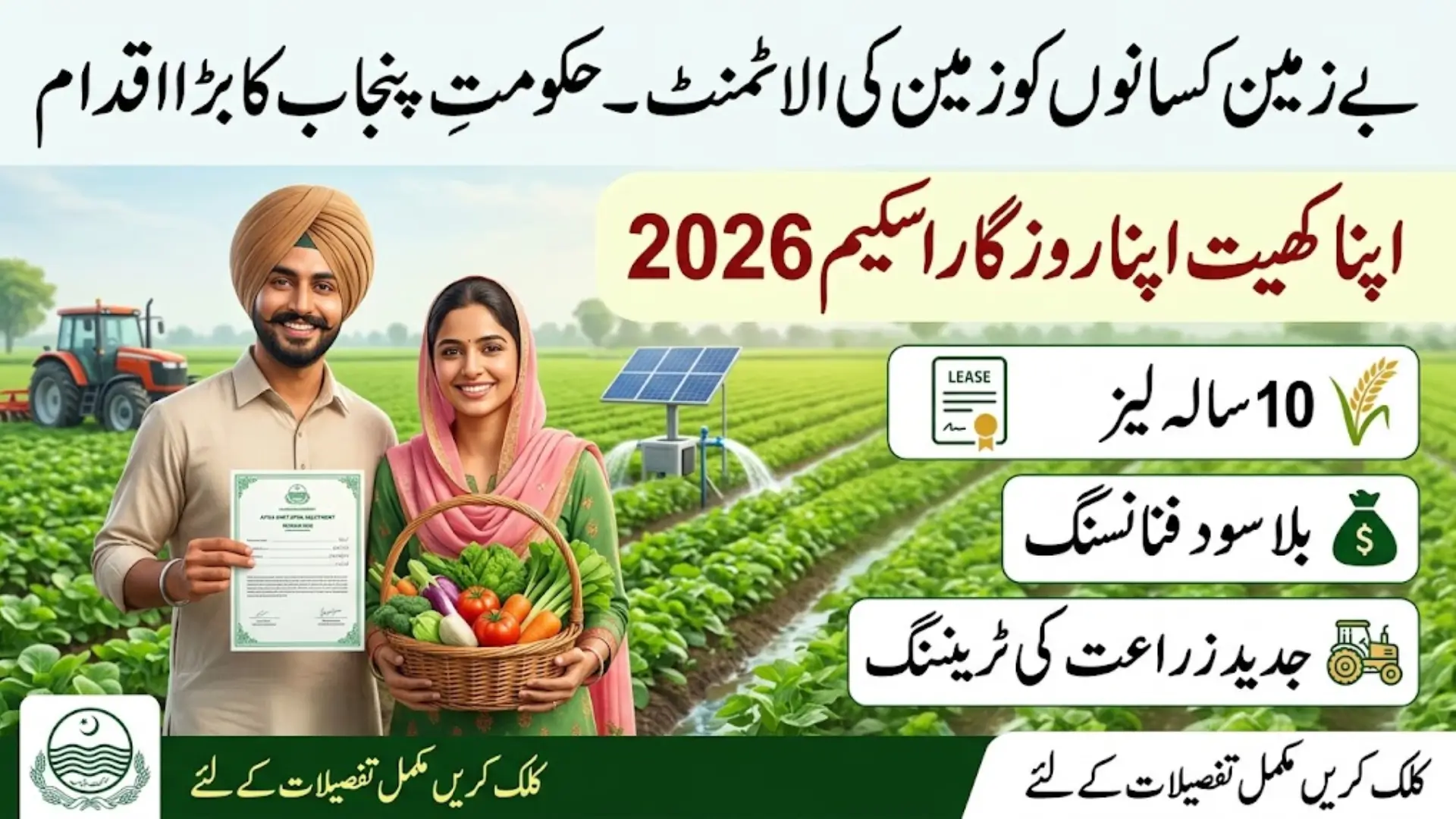
Apna Khet Apna Rozgar Scheme 2026 is a major agricultural support program of the Punjab Government for landless rural residents and small farmers. It aims to give people access to cultivable land so they can start or improve farming and create a stable source of income. The scheme is especially helpful for rural youth who want to build their future through agriculture instead of moving to cities for jobs.
The program is not only about providing agricultural land. It also connects selected beneficiaries with financial assistance, farming guidance, and modern agricultural support. The main goal is to help landless and small farmers become self-reliant, create rural employment, reduce poverty, and improve agricultural production across Punjab.
You Can Also Read: PSER Punjab Gov Pk Registration 2026 Started To Enroll In Ramzan Package
Apna Khet Apna Rozgar Latest Update 2026
The latest available information shows that the Punjab Government launched the scheme with a formal application and selection process in 2026. The reported application period was from 2 May to 18 May 2026, followed by scrutiny, appeals, final eligibility lists, and later allotment-related stages. Therefore, applicants should check official announcements for any new phase rather than assuming that the original application window is still open.
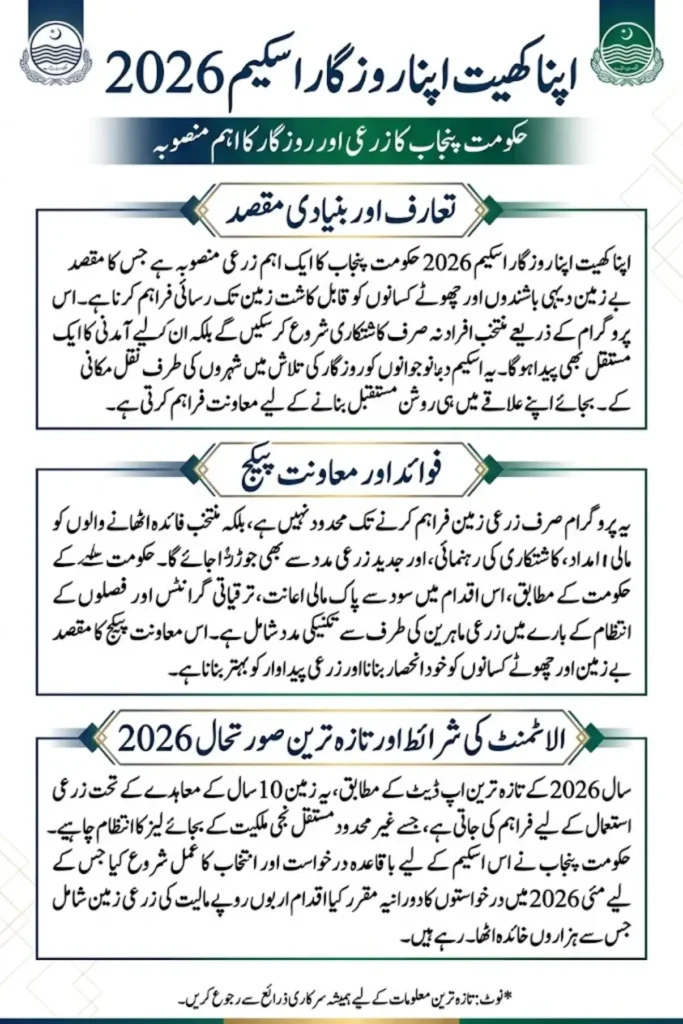
The current information also gives a clearer picture of the scale of the initiative. Government-linked reporting says agricultural land worth around Rs. 160 billion is involved, with thousands of families benefiting from agricultural plots in Punjab and Cholistan. The land is provided for agricultural use under a defined lease arrangement rather than as unrestricted permanent private property.
| Feature | Details |
|---|---|
| Scheme Name | Apna Khet Apna Rozgar Scheme 2026 |
| Province | Punjab |
| Main Target | Landless rural residents and small farmers |
| Main Support | Agricultural land and farming assistance |
| Lease Period | 10 years |
| Financial Support | Interest-free financing and development assistance |
| Application Method | Online application process |
| Selection | Scrutiny, verification and balloting where required |
Apna Khet Apna Rozgar Eligibility Criteria 2026
The main target of the scheme is landless rural residents and small-scale farmers who need access to agricultural land. Applicants should be permanent residents of Punjab and must have a valid CNIC. The scheme is focused on people who are interested in farming and can use the allotted land for productive agricultural work.
Some online sources mention specific age limits, poverty scores and exact landholding conditions, but these should not be treated as confirmed universal requirements unless they appear in the relevant official application rules. The safest approach is to follow the eligibility conditions shown on the official application portal or government notification for the relevant phase.
Applicants may generally be expected to provide:
- Valid CNIC
- Punjab residency or domicile information
- Active mobile number
- Household and landholding information
- Farming-related information
- Other documents requested during verification
You Can Also Read: PSER Punjab Gov Pk Registration 2026 Started To Enroll In Ramzan Package
Who Can Benefit From the Free Land Allotment?
The scheme is mainly aimed at people who do not have enough agricultural land to support themselves. Landless rural families and small farmers can benefit from the opportunity because access to productive land can help them generate income through cultivation.
Punjab’s rural economy depends heavily on agriculture, but many families work as tenants or agricultural labourers without owning productive land. By giving eligible applicants access to agricultural plots under the scheme, the government aims to create a more stable source of income and encourage rural entrepreneurship.
The target groups can include:
- Landless rural residents
- Small-scale farmers
- Rural youth interested in agriculture
- Families seeking sustainable agricultural income
- People who can actively cultivate the allotted land
How Much Land Is Allotted Under the Scheme?
One important point is that the land should not be described simply as permanently free land ownership. The latest reports indicate that beneficiaries receive agricultural land under a 10-year arrangement, with conditions attached to its use. The land is intended for cultivation rather than unrestricted property ownership.
The reported figures also vary from some earlier online descriptions. Current government-linked reporting refers to thousands of agricultural plots and more than 124,000 acres of irrigated agricultural land in the broader scheme details. For this reason, applicants should rely on the official phase-specific allotment information instead of assuming that every applicant will receive exactly the same acreage.
You Can Also Read: Solar Panel Prices in Pakistan Surge Ahead of Federal Budget: New Rates, Market Impact and Consumer Concerns
Free Land Allotment Terms and Conditions
Selected beneficiaries are expected to use the allotted land for agricultural purposes. The arrangement is designed to turn available agricultural land into productive farmland and create income opportunities for deserving rural families.
The land should not be treated like ordinary property that can be freely sold or used for unrelated construction. Reported scheme conditions state that the land is provided for agricultural use and that permanent construction is not allowed.
Important conditions include:
- Land is intended for agricultural activity
- The reported lease period is 10 years
- Beneficiaries must follow allotment conditions
- Permanent construction is not permitted
- Agricultural use of the land is expected
Financial Support Under Apna Khet Apna Rozgar
Land alone cannot guarantee a successful farm because new farmers also need money for cultivation, seeds, fertilizers, irrigation, and other requirements. For this reason, the scheme connects beneficiaries with financial assistance and agricultural support.
Government information describes the initiative as including interest-free financing and technical assistance. Current reporting also mentions development grants for beneficiaries to help prepare and cultivate the allotted land.
The support package may include:
- Interest-free agricultural financing
- Development assistance
- Support for cultivation
- Technical agricultural guidance
- Access to modern farming practices
You Can Also Read: Sindh Electric Buses Expansion: Government Approves 100 More EV Buses for Green Transport
Agricultural Training and Technical Assistance
Modern farming requires proper knowledge of crops, soil, irrigation, pest control, and farm management. The scheme therefore places importance on technical assistance so beneficiaries can make better use of their agricultural plots.
Agricultural experts and relevant government departments can provide guidance on farming practices and crop management. This support can be especially useful for young people who are interested in agriculture but have limited practical experience.
Apna Khet Apna Rozgar Application Process
The scheme uses a digital application system to improve accessibility and make the selection process more transparent. Applicants are required to provide their personal information and other details through the designated application process.
The application process includes registration, information submission, verification and scrutiny. Applicants should enter their CNIC and other details carefully because incorrect information can create problems during verification. The source material also describes OTP-based mobile verification as part of the online process.
The basic process can be understood as:
- Open the official application portal when applications are announced.
- Enter your CNIC and mobile number.
- Provide your personal and location details.
- Complete the required application information.
- Verify your mobile number through OTP.
- Submit the application.
- Keep your application or tracking details.
You Can Also Read: PSER Online Registration 2026 For Muft Atta And Rashan Check Details Via CNIC
Selection and Balloting Process
Applications are not automatically approved after submission. They go through scrutiny and verification before the final eligible applicants are identified. This helps the government check whether applicants meet the requirements and whether the information provided is accurate.
Where more than one eligible applicant competes for an available plot, balloting may be used. This provides a more transparent way to select beneficiaries when the number of eligible applicants is higher than the available plots.
| Selection Stage | Purpose |
|---|---|
| Application Submission | Collect applicant information |
| Scrutiny | Review submitted details |
| Verification | Confirm eligibility and information |
| Appeals | Give applicants an opportunity to raise objections |
| Final List | Identify eligible applicants |
| Balloting | Select beneficiaries where required |
| Allotment | Complete the land allocation process |
Application Schedule for 2026
The reported 2026 schedule included an application period from 2 May to 18 May. After applications closed, the process moved toward scrutiny, appeals and final eligibility decisions. This means people searching for the 2026 registration should first check whether the Punjab Government has announced another phase or fresh application window.
The reported timeline included initial scrutiny in late May, an appeals period in early June, and final eligible lists later in June. Balloting and possession were subject to subsequent official stages, so applicants should not rely on unofficial dates circulating online.
Why Apna Khet Apna Rozgar Is Important for Punjab Youth?
Rural unemployment is one of the major challenges facing young people who have limited access to jobs and productive assets. Farming can provide a long-term livelihood when people have access to land, financing, knowledge, and markets.
Apna Khet Apna Rozgar aims to connect these elements instead of offering land alone. If implemented effectively, the scheme can help young rural residents build farming businesses, increase household income, and contribute to local food production.
The expected benefits include:
- Rural employment creation
- Reduced dependence on daily wages
- Better use of agricultural land
- Increased farming activity
- Support for rural entrepreneurship
- Stronger local economies
You Can Also Read: PSER 8070 Registration Online 2026 Punjab Online Apply Full Details Step By Step
Common Mistakes Applicants Should Avoid
Applicants should provide accurate information from the beginning. Incorrect CNIC details, wrong land information, or incomplete documents can create difficulties during scrutiny and verification.
It is also important to avoid unofficial agents who promise guaranteed selection. Applicants should use government channels, keep their application information safe, and verify any new registration date before submitting personal details.
Avoid these mistakes:
- Entering an incorrect CNIC
- Providing false household information
- Submitting incomplete details
- Applying through unofficial websites
- Paying an unauthorized agent
- Assuming registration guarantees land allotment
You Can Also Read: PSER Role In PMRRP Online Portal 2026 To Check Status Using CNIC Full Details Here
Final Words
Apna Khet Apna Rozgar Scheme 2026 is designed to give landless rural residents and small farmers a better opportunity to build sustainable agricultural livelihoods. The initiative combines agricultural land access with financial and technical support, making it more than a simple land distribution program.
For Punjab youth who are interested in farming, the scheme can provide an important opportunity for self-employment. However, applicants should remember that land is provided under specific conditions and the selection process includes verification. Always check the latest official Punjab Government announcement before applying or relying on a new registration date.
FAQs
What is Apna Khet Apna Rozgar Scheme 2026?
It is a Punjab Government agricultural initiative for landless rural residents and small farmers.
It provides access to agricultural land along with financial and technical support.
Who is eligible for Apna Khet Apna Rozgar?
The scheme mainly targets landless rural residents and small-scale farmers in Punjab. Applicants must follow the official eligibility requirements announced for the relevant phase.
Is the land permanently free for beneficiaries?
No, current information describes the land as being provided under a 10-year agricultural arrangement. It is subject to conditions and is intended for farming rather than unrestricted ownership.
How can I apply for Apna Khet Apna Rozgar?
Applications are submitted through the designated online government application system when a registration phase opens. Applicants should provide their CNIC, mobile information and other required details.
Is financial support available with the land?
Yes, the scheme includes interest-free financing and agricultural assistance. Reports also mention development support for cultivation of the allotted land.
When was the 2026 application deadline?
The reported application window ran from 2 May to 18 May 2026. Applicants should check official announcements for any new phase or extension.
Can rural youth apply for the scheme?
Yes, rural youth are among the groups the initiative aims to support. The focus is on people who want to develop sustainable agricultural livelihoods.
You Can Also Read: PSER Punjab Gov Pk Registration 2026 Started To Enroll In Ramzan Package