Hajj Policy 2027
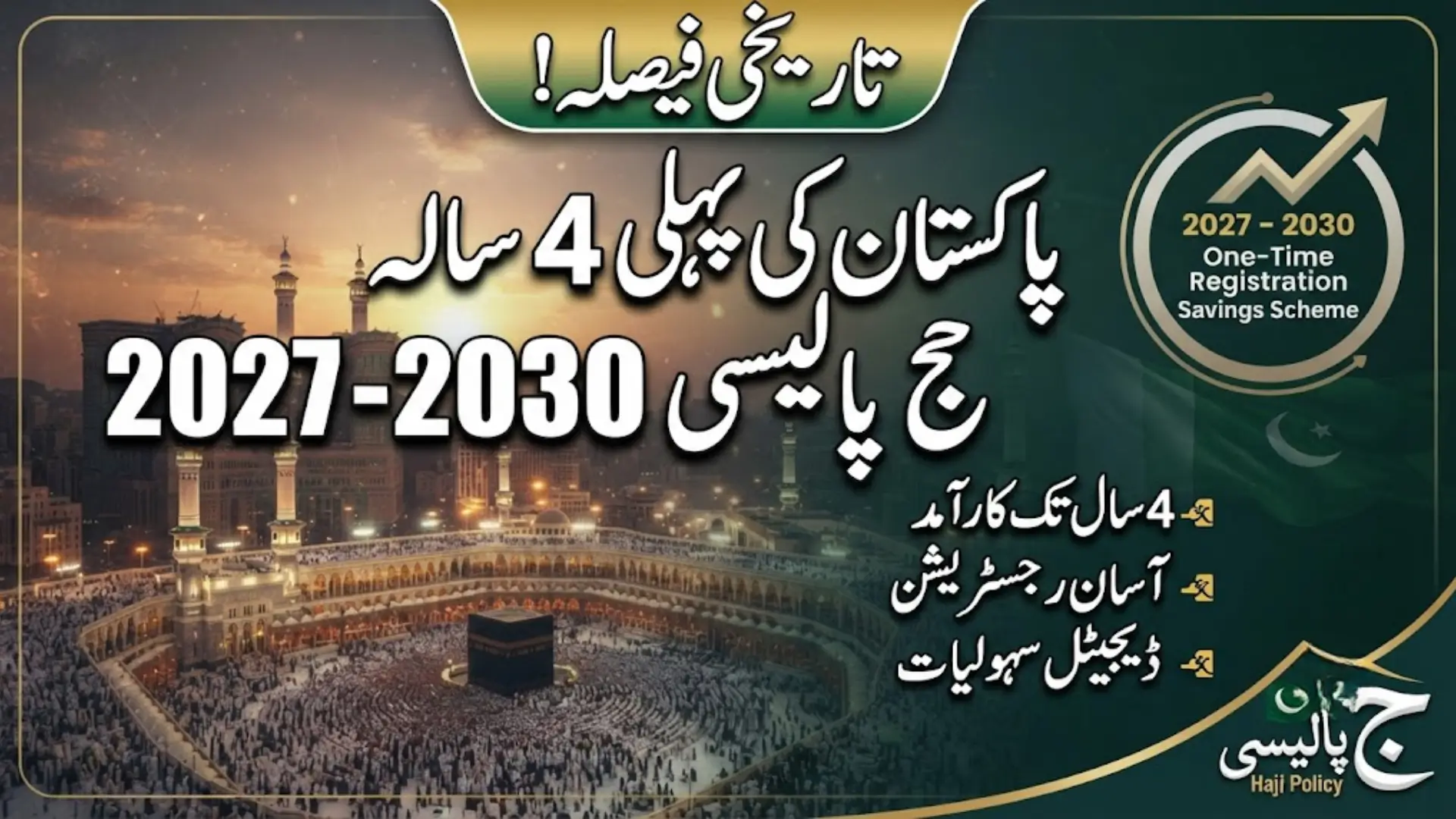
The Government of Pakistan has approved the country’s first-ever four-year Hajj policy 2027, marking a major shift in the way Hajj arrangements will be managed in the coming years. The federal cabinet approved the Pakistan Hajj Policy 2027–2030 to improve planning, simplify registration, and introduce modern systems that make the pilgrimage process easier for intending pilgrims. Unlike previous years, when a new Hajj policy was announced annually, the newly approved framework will remain effective for four years.
The long-term policy is designed to create a more organized and transparent Hajj management system. It aims to improve operational efficiency, provide better facilities for pilgrims, and strengthen coordination between Pakistani authorities and Saudi Arabia. The government has also announced that the policy can be updated whenever necessary to remain consistent with Saudi regulations governing Hajj operations.
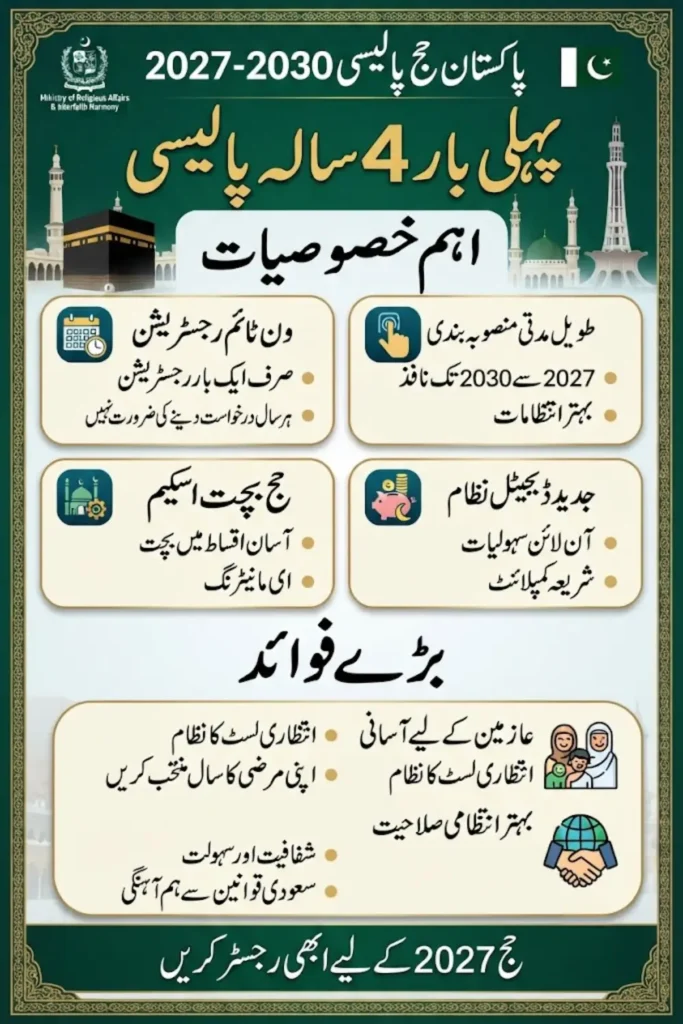
Key highlights of the new policy include:
- First four-year Hajj policy in Pakistan.
- Policy will remain effective from 2027 to 2030.
- One-time registration for intending pilgrims.
- Better planning and operational efficiency.
- Introduction of digital Hajj services.
- New savings scheme for future pilgrims.
You Can Also Read: 8800 Free Solar Scheme 2026 Eligibility Verification Know Full Guide Step By Step
Pakistan Hajj Policy 2027 Introduces a Four-Year Framework
For many years, Pakistan announced a separate Hajj policy before every pilgrimage season. While this system allowed annual adjustments, it also required repeated planning and registration activities for both pilgrims and government authorities. The newly approved Pakistan Hajj Policy 2027 replaces this annual approach with a long-term framework that will remain in place until 2030.
The introduction of a four-year policy allows authorities to prepare future Hajj operations more effectively while giving intending pilgrims greater certainty about the registration process. Long-term planning also enables the government to improve administrative arrangements and implement reforms that require more time to become fully operational.
Major features of the framework include:
- Policy valid from 2027 to 2030.
- First long-term Hajj policy in Pakistan.
- Replaces the previous annual policy.
- Supports long-term operational planning.
- Allows gradual implementation of reforms.
Pakistan Hajj Policy 2027 Aims to Improve Long-Term Planning
One of the primary objectives of the new Hajj policy is to improve planning and management across every stage of the pilgrimage process. According to the Prime Minister’s Office, the long-term framework will help government departments prepare Hajj operations more efficiently while improving the quality of services provided to Pakistani pilgrims. Better planning also reduces administrative uncertainty and allows authorities to manage resources more effectively.
The government will prepare standard operating procedures (SOPs) and additional regulations to support implementation of the policy. At the same time, officials have confirmed that the framework will remain flexible enough to accommodate any future changes introduced by Saudi Arabia. This ensures that Pakistan’s Hajj arrangements continue to comply with international requirements while maintaining smooth operations for pilgrims.
Objectives of the policy include:
- Better operational planning.
- Improved pilgrim facilities.
- Development of standard operating procedures.
- Stronger administrative coordination.
- Flexible implementation.
- Alignment with Saudi regulations.
You Can Also Read: Income Tax Calculator, Freelancer Tax Calculator & FBR Tax Slabs Guide
Pakistan Hajj Policy 2027 Brings One-Time Registration
One of the biggest changes introduced under the new policy is the one-time registration system for intending pilgrims. Previously, people planning to perform Hajj had to complete the registration process every year if they wished to apply again. Under the new framework, applicants will register only once, making the overall process much simpler and reducing unnecessary paperwork.
After completing registration, pilgrims can select their preferred Hajj year anytime up to 2030. This provides greater flexibility for individuals who may need additional time to arrange finances or personal commitments before traveling. The simplified registration process is expected to reduce administrative workloads while making future Hajj planning easier for both applicants and government authorities.
Benefits of one-time registration include:
- Registration required only once.
- No need to register every year.
- Choose any Hajj year up to 2030.
- Simpler application process.
- Less administrative burden.
- Greater convenience for pilgrims.
Pakistan Hajj Policy 2027 Introduces a Priority Waiting List
To support the new registration system, the government will also establish a priority waiting list based on completed registrations. Once applicants register, their information will remain in the system, allowing authorities to manage Hajj allocations more efficiently in future years. This approach helps create a more organized process while ensuring fairness in the allocation of available Hajj quotas.
A priority waiting list also provides greater certainty for intending pilgrims because they will no longer need to restart the registration process every year. Instead, their existing registration will remain valid, allowing them to plan their pilgrimage according to their preferred schedule and available quota.
Advantages of the waiting list include:
- Permanent registration records.
- Priority-based Hajj allocation.
- Better quota management.
- Reduced administrative delays.
- Greater transparency.
- Easier long-term planning.
Pakistan Hajj Policy 2027 Registration Overview
| Feature | Details |
|---|---|
| Policy Duration | 2027–2030 |
| Registration System | One-Time Registration |
| Annual Re-Registration | Not Required |
| Hajj Year Selection | Any Year up to 2030 |
| Waiting List | Priority-Based System |
| Policy Flexibility | Can Be Updated According to Saudi Regulations |
Pakistan Hajj Policy 2027 Strengthens Future Hajj Management
The introduction of a four-year Hajj framework reflects the government’s intention to modernize Hajj administration while improving services for future pilgrims. By reducing repetitive registration procedures and introducing long-term planning, the policy creates a stronger administrative foundation for managing Pakistan’s large Hajj quota in the coming years.
The combination of long-term planning, simplified registration, and improved operational management is expected to benefit both government authorities and intending pilgrims. These reforms also create opportunities for additional digital services and financial support initiatives that will further improve the overall Hajj experience under the new framework.
Key improvements include:
- Long-term administrative planning.
- Better management of Hajj applications.
- Simplified registration procedures.
- More transparent allocation process.
- Improved service delivery.
- Stronger operational efficiency.
You Can Also Read: Tax Calculator Pakistan 2026-27 – Salary Tax Calculator
Shariah-Compliant Hajj Savings Scheme
The Pakistan Hajj Policy 2027 also includes a new Shariah-compliant Hajj savings scheme to help intending pilgrims prepare financially for their future pilgrimage. Instead of arranging the entire Hajj amount at once, participants will be able to save gradually over time. This initiative is expected to make Hajj planning easier, especially for people who need several years to build their travel budget.
The government believes that a structured savings program will encourage better financial planning while reducing the burden of arranging Hajj expenses at the last moment. In addition to regular savings, the scheme will also provide financing options that comply with Islamic principles, giving prospective pilgrims a secure and Shariah-compliant method of preparing for Hajj.
Key features of the savings scheme include:
- Shariah-compliant savings program.
- Gradual savings for future Hajj expenses.
- Financial planning support.
- Islamic financing options.
- Easier preparation for Hajj.
- Greater financial flexibility.
Pakistan Hajj Policy 2027 Focuses on Digital Transformation
Another major reform introduced under the new policy is the complete digitization of Pakistan’s Hajj management system. The government plans to replace several manual procedures with digital services to improve transparency, efficiency, and convenience for pilgrims. These improvements are expected to simplify different stages of the Hajj process while reducing paperwork and administrative delays.
The digital framework will include online payment facilities, a digital complaint management system, and electronic monitoring of Hajj operations. By introducing technology-based solutions, authorities aim to provide quicker services, improve communication with pilgrims, and strengthen monitoring throughout the pilgrimage process.
Digital initiatives include:
- Online payment system.
- Digital complaint management.
- Electronic monitoring.
- Faster administrative processes.
- Improved transparency.
- Better service delivery.
Pakistan Hajj Policy 2027 Includes Government and Private Quotas
The four-year Hajj policy continues to provide opportunities for pilgrims through both the government Hajj scheme and licensed private tour operators. Maintaining separate quotas for both sectors allows intending pilgrims to choose the option that best matches their preferences, budget, and travel requirements.
The policy also introduces flexibility by offering both long-duration and short-duration Hajj packages. These options give pilgrims more choices based on their available time, financial planning, and personal circumstances while ensuring that Hajj arrangements remain organized under the approved framework.
Highlights of the quota system include:
- Separate government quota.
- Separate private Hajj quota.
- Licensed private operators.
- Long-duration Hajj packages.
- Short-duration Hajj packages.
- Greater flexibility for pilgrims.
You Can Also Read: PTA Tax on Imported Phones in Monthly Installments Starts July 1 Under Finance Bill 2026-27
Pakistan Hajj Policy 2027 Strengthens Training and Safety Measures
Preparing pilgrims before departure is another important objective of the new policy. The government has made mandatory training part of the Hajj process to help participants understand the religious rituals, travel arrangements, and safety guidelines before arriving in Saudi Arabia. Proper training can improve the overall pilgrimage experience while reducing confusion during Hajj.
The policy also introduces Takaful arrangements and emergency response measures to improve the welfare and protection of Pakistani pilgrims. In addition, the federal cabinet has directed authorities to appoint Hajj assistants through a transparent and merit-based selection process to ensure better support for pilgrims throughout the journey.
Training and safety measures include:
- Mandatory Hajj training.
- Takaful arrangements.
- Emergency response planning.
- Merit-based appointment of Hajj assistants.
- Better pilgrim guidance.
- Improved safety and support.
Pakistan Begins Preparations Under Pakistan Hajj Policy 2027
Although Hajj 2026 has already concluded in Saudi Arabia, Pakistan has begun preparations for Hajj 2027 under the newly approved framework. During Hajj 2026, Saudi Arabia allocated Pakistan a total quota of 179,210 pilgrims under the government and private schemes. Building on this experience, authorities have already started implementing the new registration process for future pilgrims.
The government’s early preparations have received a positive response from the public. According to official information, approximately 250,000 citizens completed mandatory registration for Hajj 2027 within the first 15 days. This strong participation highlights the growing interest in the new registration system and demonstrates public confidence in the government’s long-term Hajj planning.
Pakistan Hajj Policy 2027 Key Highlights
| Feature | Details |
|---|---|
| Policy Duration | 2027–2030 |
| Registration | One-Time Registration |
| Hajj Year Selection | Up to 2030 |
| Savings Scheme | Shariah-Compliant |
| Digital Services | Online Payments, Complaint System, Electronic Monitoring |
| Hajj Packages | Long-Duration and Short-Duration |
| Quota System | Government and Private |
| Hajj 2026 Quota | 179,210 Pilgrims |
| Hajj 2027 Registration | Around 250,000 Registrations in 15 Days |
Benefits of Pakistan Hajj Policy 2027
The newly approved policy introduces several long-term improvements that are expected to make Hajj management more efficient while providing greater convenience for intending pilgrims. Simplified registration, financial planning options, digital services, and stronger administrative systems are all designed to improve the overall pilgrimage experience over the next four years.
The policy also creates a stable framework that allows authorities to plan future Hajj operations more effectively while remaining flexible enough to adapt to any regulatory changes introduced by Saudi Arabia. As a result, both the government and pilgrims are expected to benefit from a more organized and transparent system.
Major benefits include:
- One-time registration process.
- Long-term planning until 2030.
- Shariah-compliant savings scheme.
- Digital Hajj management.
- Online payment facilities.
- Transparent quota management.
- Mandatory pilgrim training.
- Better emergency preparedness.
- Improved operational efficiency.
You Can Also Read: Pakistan to Train 400,000 Workers for Saudi Arabia FIFA World Cup 2034 Jobs
Conclusion
The Pakistan Hajj Policy 2027 marks a significant change in the country’s approach to Hajj management by introducing its first four-year framework covering the period from 2027 to 2030. The policy replaces the traditional annual system with long-term planning that simplifies registration, improves transparency, and strengthens operational efficiency. Features such as one-time registration, a priority waiting list, digital Hajj services, and a Shariah-compliant savings scheme are expected to make future Hajj arrangements more convenient for Pakistani pilgrims.
In addition to improving administrative procedures, the policy places greater emphasis on pilgrim welfare through mandatory training, Takaful arrangements, emergency response planning, and merit-based appointment of Hajj assistants. As preparations for Hajj 2027 continue, the new framework is expected to provide a more efficient, transparent, and well-organized system that benefits both the government and intending pilgrims.
FAQs
What is Pakistan Hajj Policy 2027?
Pakistan Hajj Policy 2027 is the country’s first four-year Hajj framework, approved to remain effective from 2027 to 2030 and improve Hajj management.
Will pilgrims need to register every year?
No. Under the new policy, intending pilgrims only need to register once and can choose their preferred Hajj year up to 2030.
What is the new Hajj savings scheme?
The government plans to introduce a Shariah-compliant savings scheme that allows pilgrims to save gradually and arrange financing for future Hajj expenses.
What digital services are included in the new Hajj policy?
The policy includes online payment facilities, a digital complaints management system, and electronic monitoring to improve transparency and efficiency.
Does the policy include government and private Hajj schemes?
Yes. The four-year policy maintains separate quotas for both the government Hajj scheme and licensed private Hajj operators.
What new facilities are available for pilgrims?
The policy introduces mandatory training, Takaful arrangements, emergency response measures, and improved digital services to enhance the overall Hajj experience.
How many people registered for Hajj 2027?
According to official information, around 250,000 people completed mandatory registration for Hajj 2027 within the first 15 days.
Can the four-year Hajj policy be changed?
Yes. The government may amend the policy whenever necessary to ensure it remains aligned with Saudi Arabia’s Hajj laws and regulations.
You Can Also Read: NADRA Pak ID Facial Recognition Verification for Pensioners: Government Ends Bank Visits for Pension Payments
Source: Propakistani